African cities are experiencing unprecedented growth pressures. Nairobi, Lagos, Accra, and Johannesburg push outward as urban cores become prohibitively expensive for middle-class families.
This expansion creates a critical decision point for diaspora investors and returning families. Urban apartments offer convenience and lifestyle within city centers. Satellite town homes promise space and affordability on city peripheries.
The choice determines daily life quality, commute times, property appreciation potential, and long-term investment returns for the next decade.
Understanding the 2025 African Property Landscape
African urban property markets entered 2025 with distinct trends reshaping investment decisions. Remote work normalization reduced the necessity of city-center proximity for many professionals.
Infrastructure investments in satellite corridors improved dramatically. Kenya's expressways, Nigeria's road expansions, and South Africa's transit projects reduced commute barriers that once made suburban living impractical.
However, urban cores maintain magnetic pull. Employment concentration, social amenities, international schools, and quality healthcare facilities cluster in established city centers.
Property prices reflect these dynamics. Urban apartment prices in prime Nairobi, Lagos, or Johannesburg locations appreciated 40-60% over the past five years. Satellite town properties showed 25-40% growth as infrastructure improved accessibility.
The 2025 buyer faces fundamentally different market conditions than previous decades. Technology enables remote work, infrastructure reduces distance penalties, yet urban amenities remain concentrated.
What Defines Urban Apartments in African Context
Urban apartments occupy buildings within established city boundaries. These properties sit in Nairobi's Kilimani, Westlands, or Parklands; Lagos's Victoria Island or Ikoyi; Johannesburg's Sandton or Rosebank.
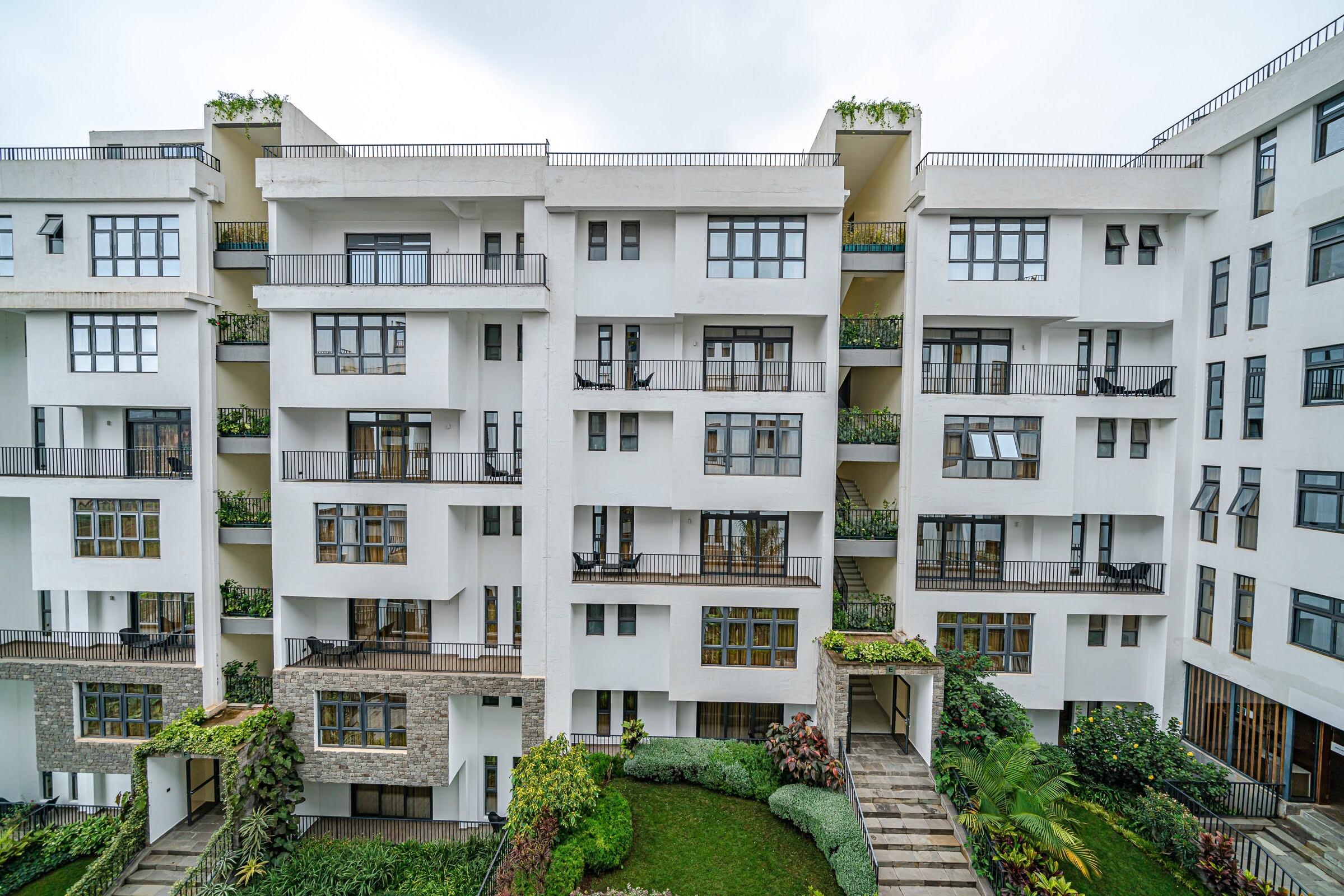
Most African urban apartments comprise purpose-built residential complexes featuring multiple units within secured buildings. They include studio, one, two, or three-bedroom configurations with shared amenities.
Security forms the core value proposition. Controlled access, CCTV surveillance, and 24-hour guards provide protection that standalone homes struggle to match in African urban environments.
Amenities often include swimming pools, gyms, backup generators, water storage, high-speed internet, and parking facilities. These shared resources spread costs across multiple owners while providing facilities individuals couldn't afford independently.
Professional property management handles maintenance, security coordination, and common area upkeep. This turnkey approach suits diaspora investors lacking time or local presence for hands-on management.
Density characterizes urban apartments. Neighbors share walls, floors, and ceilings. Common spaces, elevators, and parking create constant social interaction whether desired or not.
What Defines Satellite Town Homes in 2025
Satellite towns encircle major African cities at distances of 20-50 kilometers from central business districts. Kiambu, Ruiru, and Ruaka around Nairobi; Ibeju-Lekki and Epe near Lagos; Centurion and Midrand near Johannesburg.
These areas feature standalone homes, townhouses, or low-density developments. Properties typically include private compounds with individual land ownership rather than shared vertical structures.
Space defines satellite town appeal. Plots of 1/8 to 1/4 acre provide gardens, parking for multiple vehicles, and outdoor living areas impossible in urban apartments.
Development quality varies significantly. Established satellite towns like Ruaka or Midrand offer mature infrastructure and complete amenities. Emerging areas like Konza or Epe promise future potential but currently lack full services.
Gated communities dominate satellite town development. Developers create mini-cities with internal infrastructure, security, and amenities mimicking urban conveniences within suburban settings.
Commuting defines satellite town life fundamentally. Residents travel 45 minutes to 2 hours reaching urban employment centers, depending on traffic conditions and distance.
Urban Apartments: Comprehensive Analysis
Location and Accessibility Benefits
Urban apartments sit minutes from employment centers. Nairobi CBD, Upperhill, or Westlands business districts remain within 15-30 minute commutes.
Public transportation access proves superior. Matatus, buses, and ride-sharing services operate frequently. Future metro systems will primarily serve urban corridors initially.
Walking to restaurants, shopping, entertainment, and services becomes possible. Urban living reduces car dependency, lowering transportation costs and environmental impact.
International schools, premium hospitals, and cultural venues cluster in urban areas. Families prioritize these proximity benefits when children's education and healthcare access matter most.
Space Constraints Reality
Urban apartments typically range from 50-150 square meters. Two-bedroom units average 80-100 square meters—adequate but limiting for growing families.
Storage space remains perpetually insufficient. Closets, pantries, and storage rooms can't accommodate possessions families accumulate over years.
Outdoor space essentially doesn't exist. Balconies provide limited fresh air access but no gardens, play areas, or private outdoor living.
Parking limitations create daily frustrations. Many developments allocate one space per unit; visitors park on streets or paid lots.
Noise from neighbors impacts quality of life. Crying babies, loud music, arguments, and daily activities penetrate shared walls despite construction quality.
Financial Considerations
Purchase prices in prime urban locations range dramatically. Nairobi's Kilimani two-bedroom apartments cost KES 8-15 million. Lagos Victoria Island equivalents reach NGN 50-100 million. Johannesburg Sandton units command ZAR 2-4 million.
Service charges add significant ongoing costs. Monthly fees of KES 15,000-40,000 for Nairobi apartments, NGN 50,000-150,000 for Lagos, or ZAR 2,000-5,000 for Johannesburg cover security, maintenance, and amenities.
These service charges increase annually, often exceeding inflation rates. Budget for 5-10% annual increases when calculating long-term affordability.
Property taxes apply based on valuations. Urban properties face higher assessments than suburban equivalents, increasing annual tax obligations.
Rental Market Dynamics
Urban apartments generate strong rental demand. Young professionals, expatriates, and small families prioritize location over space.
Rental yields typically range 5-7% annually in established urban areas. A KES 12 million apartment might rent for KES 60,000-70,000 monthly.
Tenant turnover happens more frequently in apartments. Annual or bi-annual moves characterize urban rental markets as tenants chase career opportunities or lifestyle changes.
Professional tenant pools reduce default risks. Salaried employees and corporate tenants offer payment reliability that satellite town tenants sometimes lack.
Vacancy periods remain relatively short. Quality urban apartments re-rent within 1-3 months typically, minimizing income disruptions.
Lifestyle and Amenities
Urban living enables spontaneous social engagement. Coffee shops, restaurants, cinemas, and cultural events sit within walking distance.
Professional networking opportunities concentrate in cities. Industry events, conferences, and business meetings happen predominantly in urban centers.
Gyms, pools, and recreational facilities within developments eliminate external membership costs. However, shared facilities mean crowded peak hours and usage restrictions.
Domestic help and services cluster in urban areas. Finding reliable housekeepers, cooks, or maintenance professionals proves easier than in satellite towns.
Security feels immediate and visible. Guards, cameras, and controlled access provide constant reassurance despite slightly higher urban crime rates overall.
Appreciation Potential
Established urban areas appreciate steadily but slowly. Nairobi's Kilimani or Lagos's Victoria Island showed 5-8% annual appreciation over the past decade.
Supply constraints limit urban expansion. Finite central land prevents oversupply, supporting long-term value stability.
Infrastructure improvements boost specific urban corridors. Nairobi's Expressway enhanced Westlands and Parklands values significantly. Lagos Light Rail affects property values along routes.
Premium segments appreciate faster. Luxury urban apartments in top locations outperform mass-market units during economic growth periods.
However, older apartments depreciate as newer developments offer superior amenities. Building age significantly impacts value in African markets where maintenance standards vary.
Satellite Town Homes: Comprehensive Analysis
Space and Privacy Advantages
Satellite homes provide 150-300+ square meters of living space. Four-bedroom houses with multiple bathrooms, living areas, and dedicated spaces for home offices or hobbies become standard.
Private compounds offer gardens for children, pets, vegetable gardening, or outdoor entertainment. This connection to nature proves impossible in apartment living.
Parking accommodates multiple vehicles comfortably. Families with teenage drivers, multiple adults, or vehicle collections find adequate space.
Noise from neighbors virtually disappears. Detached or semi-detached homes provide sound isolation apartments cannot match.
Storage capacity solves the urban apartment's primary frustration. Garages, storerooms, and basements accommodate possessions accumulated over lifetimes.
The Commute Reality
Satellite town residents spend 1.5-4 hours daily commuting. Traffic conditions determine whether 30-kilometer distances take 45 minutes or two hours.
Fuel costs add substantially to monthly budgets. A 50-kilometer daily round trip costs KES 10,000-20,000 monthly depending on vehicle efficiency and fuel prices.
Vehicle maintenance accelerates with daily long-distance driving. Frequent servicing, tire replacements, and mechanical wear consume budgets and time.
Alternative transportation options remain limited. Public transport to satellite towns operates less frequently with longer journey times than urban routes.
Remote work mitigates commute burdens significantly. Professionals working from home 2-3 days weekly face manageable commute stress; daily office attendance becomes exhausting.
Financial Considerations
Purchase prices offer dramatic savings. Properties costing KES 15 million in Kilimani cost KES 8-10 million in Ruaka for substantially larger space.
Service charges in gated satellite communities range lower than urban apartments. Monthly fees of KES 5,000-15,000 provide security and maintenance without expensive amenities.
Property taxes reflect lower valuations. Satellite properties face smaller annual tax obligations than urban equivalents.
Utility costs run higher. Larger homes consume more electricity, water, and gas than compact apartments. Budget 50-100% more for utilities.
Maintenance responsibilities fall entirely on owners. Unlike apartments with management handling common areas, satellite homeowners coordinate all repairs, landscaping, and upkeep.
Rental Market Challenges
Rental demand concentrates on urban areas. Finding quality tenants for satellite properties takes longer with smaller applicant pools.
Rental yields typically range 4-6% annually. A KES 10 million Ruiru home might rent for KES 40,000-50,000 monthly—decent return but lower than urban equivalents.
Tenant expectations differ. Satellite renters want family-friendly environments, good schools nearby, and secure neighborhoods. They're more selective than urban apartment seekers.
Vacancy periods extend longer. Re-renting satellite homes often takes 3-6 months as fewer potential tenants search those markets actively.
Property management proves more challenging. Fewer professional management companies serve satellite areas effectively, requiring more owner involvement.
Infrastructure Dependencies
Satellite town viability depends entirely on infrastructure delivery. Promised roads, water systems, electricity, and internet must materialize for property values to appreciate.
Many satellite developments promoted enthusiastically in 2015-2020 remain partially completed in 2025. Infrastructure delays strand properties far from functional urban integration.
Government infrastructure projects determine satellite town success dramatically. Kenya's expressways transformed previously remote areas into viable suburbs overnight.
Private developer infrastructure sometimes fails. Companies promise amenities that bankruptcy, mismanagement, or financial strain prevent from completing.
Research infrastructure thoroughly. Verify current status, not promises. Completed functional infrastructure supports property values; planned infrastructure represents speculation.
Community and Lifestyle
Satellite towns foster tight-knit communities. Neighbors know each other, children play together, and social bonds develop naturally in lower-density environments.
Family-friendly atmospheres prevail. Parks, playgrounds, and safe streets enable children to bike, play, and explore independently.
Expatriate and diaspora communities concentrate in certain satellite developments. This creates cultural comfort zones with like-minded neighbors sharing similar backgrounds.
However, social isolation affects some residents. Distance from urban cultural venues, entertainment options, and spontaneous social opportunities creates lifestyle restrictions.
Weekend traffic into cities frustrates satellite residents. Family outings, shopping trips, or social engagements require planning around traffic patterns.
Appreciation Potential
Satellite towns show higher percentage appreciation when infrastructure delivers. Properties in Ruaka appreciated 50-70% following road improvements and commercial development.
However, stalled infrastructure kills appreciation. Konza Technopolis properties showed minimal growth as promised development lagged years behind schedule.
Emerging satellite towns offer highest risk-reward ratios. Early investment captures maximum appreciation but carries execution risk if development stalls.
Established satellite towns provide stable moderate appreciation. Areas like Kiambu or Midrand appreciate 6-10% annually with proven infrastructure and community maturity.
Comparative Decision Framework
For Young Professionals
Urban apartments suit early-career professionals prioritizing networking, social life, and career advancement. Proximity to employment clusters, after-work activities, and professional events matters more than space.
Satellite homes make sense once families start forming. Children's space needs, school considerations, and lifestyle preferences shift toward suburban advantages.
For Families with Children
School proximity determines optimal choices. If children attend urban international schools, apartment living minimizes daily commute stress on families.
Satellite homes become attractive when quality schools exist locally. Growing families benefit from space, safety, and childhood experiences suburban environments provide.
Consider children's ages carefully. Teenagers with independent mobility appreciate urban convenience. Young children benefit from satellite town space and safety.
For Remote Workers
Satellite town homes offer unbeatable value for remote workers. Space for home offices, quiet work environments, and affordable living without commute penalties.
However, internet reliability becomes critical. Verify fiber optic availability and backup options before committing to satellite locations for remote work.
For Retirees
Satellite towns generally suit retirees better. Space, quiet, lower costs, and community atmospheres align with retirement lifestyle priorities.
However, healthcare access matters increasingly with age. Urban proximity to quality hospitals and specialists provides security satellite distance complicates.
Active retirees who travel frequently might prefer urban apartments. Lower maintenance, security, and convenience matter more than space when homes sit empty regularly.
For Diaspora Investors
Urban apartments offer easier property management from overseas. Professional management, defined structures, and predictable maintenance suit absentee ownership.
Satellite homes require more hands-on oversight. Finding reliable property managers, coordinating maintenance, and ensuring security proves more challenging remotely.
However, satellite properties offer better price-to-value ratios. Investment capital purchases more property generating potentially better long-term returns.
For First-Time Buyers
Budget constraints often force first-time buyers toward satellite options. Urban apartments in prime locations exceed affordable entry points for many.
However, starting with smaller urban apartments builds equity faster in appreciating markets. Later trading up remains possible as income and savings grow.
Consider total costs beyond purchase price. Service charges, parking fees, and lifestyle expenses sometimes make satellite homes more affordable despite similar purchase prices.
Infrastructure and Development Trends Shaping 2025
Transportation Improvements
Kenya's Nairobi Expressway revolutionized commuting from Westlands, Kiambu, and Ruiru. Similar projects in other African cities will determine future satellite town viability.
Lagos–Ibadan Expressway improvements and Lagos Light Rail expand livable distance from employment centers. These infrastructure investments make previously remote areas suddenly viable.
Johannesburg's Gautrain extensions and road improvements continue integrating satellite towns into metro areas. Transportation infrastructure determines property value trajectories definitively.
However, African infrastructure projects face delays consistently. Count on nothing until fully operational, not when politicians announce groundbreakings.
Technology Enabling Suburban Life
Fiber optic internet reaches satellite towns increasingly. Reliable high-speed connectivity enables remote work making suburban living professionally viable.
E-commerce delivery services expand to satellite areas. What once required city trips—groceries, supplies, services—now gets delivered, reducing urban dependency.
Digital entertainment eliminates urban entertainment advantages partially. Streaming services, online gaming, and digital content reduce the necessity of urban cultural venue proximity.
However, technology can't replace face-to-face professional networking, spontaneous social encounters, or cultural experiences that urban living provides organically.
Commercial Development Following Residents
Retail, restaurants, and services follow population concentrations. Successful satellite towns develop commercial centers reducing urban dependency for daily needs.
Ruaka, Syokimau, and other established satellites now feature supermarkets, schools, hospitals, and entertainment venues. This maturation increases livability dramatically.
However, emerging satellite developments lack these conveniences for years. Early residents pioneer lifestyle sacrifices that later arrivals don't experience.
Environmental and Climate Considerations
Urban heat islands make city centers increasingly uncomfortable. Satellite areas with more green space offer cooler temperatures and better air quality.
Flooding risks affect both urban and satellite areas differently. Verify drainage, flood history, and climate vulnerability before purchasing either property type.
Water scarcity impacts satellite towns more severely. Urban areas receive priority when supplies tighten; suburban areas face rationing and shortages.
Financial Analysis and ROI Comparison
Purchase Price Comparison
A comparable property analysis reveals stark differences. A three-bedroom, two-bathroom property in urban Nairobi (apartment) costs KES 12-15 million. The same bedroom count in Ruaka (house) costs KES 8-10 million.
This 30-40% price difference exists across African markets. Urban locations command premium pricing that satellite alternatives undercut substantially.
However, price-per-square-meter calculations show urban apartments costing 50-100% more. You're paying for location, not space.
Total Cost of Ownership
Five-year ownership cost projections reveal hidden expenses. Urban apartments incur:
- Purchase: KES 12 million
- Service charges: KES 900,000 (KES 15,000 × 60 months)
- Maintenance: Minimal (managed by association)
- Utilities: KES 600,000
- Total: KES 13.5 million
Satellite homes incur:
- Purchase: KES 9 million
- Service charges: KES 360,000 (KES 6,000 × 60 months)
- Maintenance: KES 500,000 (owner responsibility)
- Utilities: KES 900,000 (larger space)
- Commute costs: KES 900,000 (KES 15,000 × 60 months)
- Total: KES 11.66 million
Satellite homes show 15% lower five-year costs despite commute expenses and maintenance responsibilities.
Appreciation Projections
Conservative appreciation scenarios through 2030:
Urban apartment starting at KES 12 million appreciating 6% annually reaches KES 16.1 million by 2030.
Satellite home starting at KES 9 million appreciating 8% annually (infrastructure-dependent) reaches KES 13.2 million by 2030.
Urban apartment gains KES 4.1 million absolute appreciation. Satellite home gains KES 4.2 million with lower initial investment.
However, satellite appreciation carries infrastructure delivery risk. If promised improvements stall, appreciation drops to 4-5% annually.
Rental Income Analysis
Urban apartment purchased at KES 12 million renting for KES 65,000 monthly:
- Annual gross rent: KES 780,000
- Less service charges: KES 180,000
- Less management fees: KES 78,000 (10%)
- Net annual income: KES 522,000
- Net yield: 4.35%
Satellite home purchased at KES 9 million renting for KES 45,000 monthly:
- Annual gross rent: KES 540,000
- Less service charges: KES 72,000
- Less management fees: KES 54,000 (10%)
- Less maintenance reserve: KES 90,000
- Net annual income: KES 324,000
- Net yield: 3.6%
Urban apartments generate superior yields despite higher purchase prices. However, satellite properties require lower initial capital deployment.
Making Your 2025 Decision
Assess Your Priorities
Create a weighted priority list ranking factors: space, location, commute tolerance, investment returns, lifestyle preferences, and budget constraints.
Space-prioritizers favor satellite homes. Location-prioritizers choose urban apartments. Most buyers balance multiple competing priorities.
Be honest about commute tolerance. Optimistic assumptions about traffic tolerance lead to lifestyle regrets years later.
Calculate True Affordability
Banks approve mortgages based on gross income, but you pay from net income after taxes and existing obligations.
Include all costs: mortgage, service charges, utilities, insurance, maintenance, transportation, and lifestyle expenses. Many buyers underestimate total financial burden.
Aim for housing costs consuming no more than 35% of net monthly income. This conservative approach maintains financial flexibility for life's surprises.
Visit Both Options Extensively
Spend time in target neighborhoods at various times. Morning, evening, and weekend visits reveal different character aspects single viewings miss.
Test actual commutes personally during typical work hours. Theoretical traffic calculations rarely match lived experience.
Talk with current residents honestly. They share realities marketing materials and agents conceal. Most people answer direct questions about satisfaction and regrets.
Consider Your Timeline
Short-term residents (2-5 years) favor urban apartments. Lower transaction costs, easier resale, and minimal maintenance suit temporary ownership.
Long-term homeowners (10+ years) benefit from satellite homes. Space, customization freedom, and children's development needs justify suburban commitments.
Investment timeline affects strategy significantly. Quick flip investors need liquidity; buy-and-hold investors tolerate less liquid markets.
Plan for Life Changes
Anticipate major life events over ownership horizon. Career changes, family expansion, aging parents, or retirement plans affect optimal housing choices.
Flexible properties that accommodate changing needs prevent forced sales during unfavorable market conditions. Consider resale potential beyond personal use.
Seek Professional Guidance
Real estate agents provide market intelligence comparing options fairly. However, remember they earn commissions motivating sales completions.
Financial advisors assess affordability within broader financial contexts. They consider retirement savings, emergency funds, and other goals beyond housing.
Property lawyers review contracts, verify titles, and protect legal interests. Their involvement prevents expensive mistakes regardless of property type chosen.
Frequently Asked Questions
- Nairobi quality two-bedroom apartments in decent urban areas start around KES 8-10 million. Lagos Victoria Island or Lekki apartments require NGN 40-60 million minimum. Johannesburg suburban apartments start ZAR 1.5-2 million. These represent entry-level pricing for secure, well-maintained properties in functional urban locations. Premium areas command 50-100% more. Budget additional 8-12% for transaction costs including legal fees, stamp duty, and valuation charges.