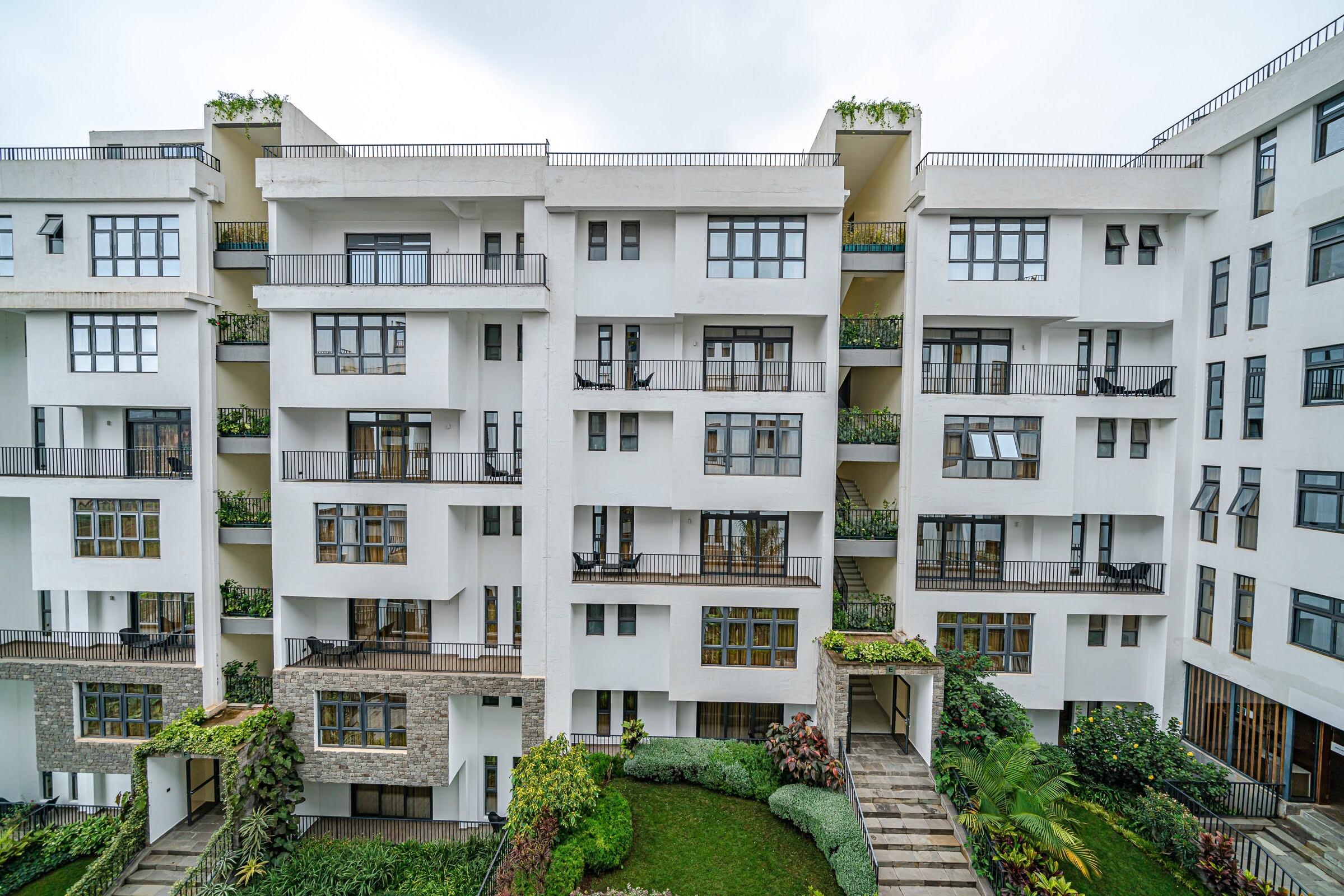

Kenya Homes Expo Insights: Emerging Opportunities for Diaspora Buyers
The recent Kenya Homes Expo highlighted a powerful shift in how Kenyans living abroad approach domestic real estate. For many in the diaspora, building wealth back home is more than a financial decision; it is a vital step toward securing a legacy and maintaining a deep connection to their roots.
Diaspora Investment Interest by Property Type Post-Expo
✨
1-Bedroom Units
Kilimani, Kileleshwa
Demand Trend (Rehani Soko Data)High (Short-term rentals)
✨
2-Bedroom Apartments
Westlands, Parklands
Demand Trend (Rehani Soko Data)Medium-High (Corporate lets)
✨
3-Bedroom Townhouses
Lavington, Karen
Demand Trend (Rehani Soko Data)Steady (Family relocation)
Rehani Soko market intelligence indicates that diaspora inquiries for Nairobi real estate increased significantly during and immediately following the expo. While navigating cross-border investments can feel complex from thousands of miles away, a clear process removes the uncertainty.
Market data consistently shows that well-placed investments in areas like Kilimani and Westlands offer compelling yields, particularly within the short-term rental sector, where occupancy rates remain highly attractive. Furthermore, transaction patterns confirm that overseas buyers are increasingly targeting secure, modern developments that cater to both business travelers and vacationing families.
According to the Central Bank of Kenya (CBK), the current exchange rate environment provides a stable foundation for dollar-earning investors. This stability allows buyers to plan their capital deployment and project their returns with greater confidence. This predictability is essential for those balancing financial obligations in the US with long-term investment ambitions in Kenya.
Visual summary: The comic series below walks through the story and ideas in this article.
📖
Page 1 of 5Nairobi Returns: The Diaspora Dilemma
The expo revealed that developers are increasingly tailoring their projects to meet international standards, offering amenities like high-speed internet, backup generators, and smart security systems that appeal directly to the diaspora market. To explore these emerging opportunities, you can browse available properties in Nairobi that align with these high-demand categories.
Understanding the local market dynamics is essential before making a commitment. If you have specific legal questions, require clarity on zoning regulations, or want to understand the exact requirements for foreign-based buyers, our AI assistant, Ask Hani, can provide immediate, accurate guidance tailored to your investment goals.
Capitalizing on Currency: How 6.85% US Mortgage Rates Alter Nairobi Purchasing Power
With US mortgage rates hovering around 6.85%, many Kenyans living abroad face a challenging domestic housing market. However, this macroeconomic shift presents a unique advantage for those looking back home. A clear process removes the uncertainty of cross-border investing, allowing you to transform high foreign borrowing costs into a strategic advantage in Kenya.
Diaspora Purchasing Power Summary US vs Nairobi
✨
Prevailing Rate
6.85% average mortgage
Nairobi Market AdvantageFavorable diaspora financing options
✨
Currency Strength
High dollar value
Nairobi Market AdvantageStrong conversion to Kenyan Shilling
✨
Asset Acquisition
High entry barriers
Nairobi Market AdvantagePremium short-term rental access
According to the Central Bank of Kenya (CBK), recent exchange rate dynamics have maintained a strong position for the US dollar against the Kenyan Shilling. When you combine this currency strength with the current 6.85% US mortgage rate environment, redirecting capital to Kenyan real estate becomes highly attractive. Rehani Soko property analytics reveal that diaspora buyers using dollar-denominated savings possess significantly higher purchasing power in premium Nairobi neighborhoods compared to their local US markets.
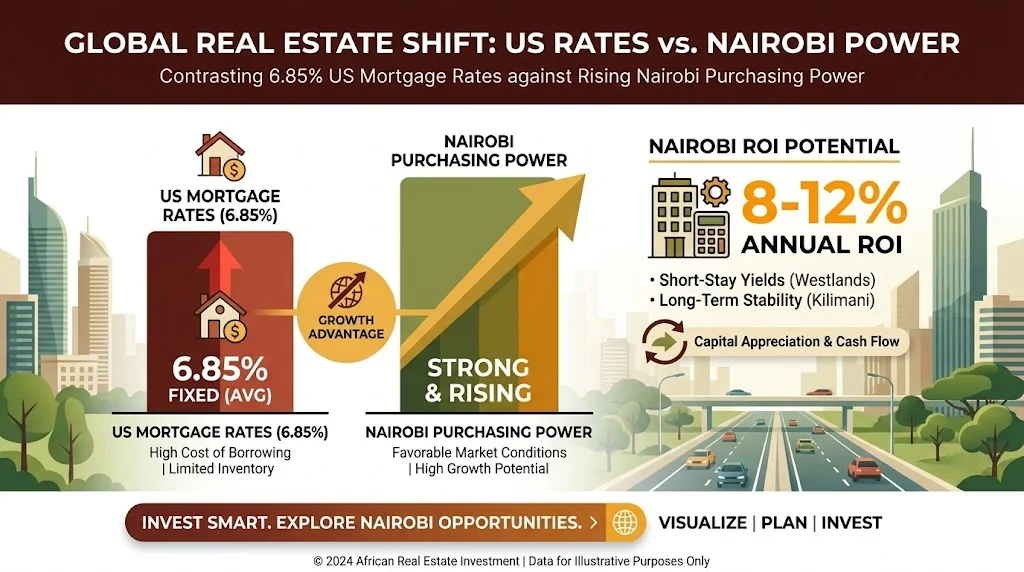
Market data consistently shows that investors who pivot their strategy during high-interest periods secure better long-term value. Instead of battling high borrowing costs abroad, many are choosing to build their legacy in Kenya. This is more than a financial decision; it is a profound step toward securing a foundation in the homeland. The dream of owning a piece of home remains deeply rooted in the diaspora experience, and current economic conditions make that dream highly attainable.
To explore how your dollar budget translates into local assets, you can browse properties in Nairobi that align with short-term rental strategies. Furthermore, understanding your financing options is critical before making an offer. Use our mortgage calculator to evaluate how your foreign income can secure competitive local financing, ensuring your investment back home is both emotionally fulfilling and financially sound.
Kilimani and Westlands Yields: Airbnb vs. Traditional Hotel ROI for Summer Returns
For Kenyans abroad, securing an income-generating asset back home offers both financial reward and a deep sense of belonging. When evaluating prime neighborhoods, Rehani Soko market intelligence indicates that Kilimani and Westlands remain the premier destinations for short-term rental investments. As summer travel peaks, bringing tourists and returning diaspora, market data consistently shows that furnished apartments in these nodes outpace traditional long-term leases in revenue generation.
The choice between a short-term model and traditional leasing often causes hesitation for overseas buyers. However, a clear process removes the uncertainty. According to Rehani Soko occupancy data, well-managed short-term rentals in Westlands maintain peak occupancy during summer travel months, driven heavily by corporate and expatriate demand. Meanwhile, Kilimani, with its vibrant lifestyle amenities, captures a significant share of vacationing diaspora. Transaction patterns confirm that investors who target these high-demand nodes achieve exceptional returns when aligning their property type with seasonal traveler preferences.
While traditional hotel models rely on rigid pricing structures, short-term rentals offer pricing flexibility and lower overhead, directly improving the investor's bottom line. For those ready to explore these high-yield zones, you can browse properties in Nairobi to identify units positioned for strong summer performance. By focusing on these specific areas, diaspora investors can confidently build a portfolio that honors their roots while delivering measurable financial growth in Kenya Shillings (KES). If you need guidance on structuring your purchase from abroad, our Ask Hani assistant can help clarify the investment steps.
Asset Selection: High-Yield 1-Bedroom Apartments vs. Long-Term Family Homes
For Kenyans living abroad, the dream of building a tangible foundation back home is a deeply personal milestone. Fortunately, a clear process removes the uncertainty when deciding between a high-yield 1-bedroom apartment and a larger family home. Rehani Soko market intelligence indicates that transaction patterns confirm a distinct split in diaspora buyer behavior based on their primary financial goals. While some prioritize immediate cash flow to offset US-based liabilities, others focus on securing a future residence for their eventual return.
Rental Strategy Comparison for Prime Nairobi Nodes
📊Westlands
Rental StrategyShort-Term (Furnished)
Target DemographicCorporate & Expatriates
Yield Potential (Rehani Soko Analytics)Premium (High Season Peak)
📊Kilimani
Rental StrategyShort-Term (Furnished)
Target DemographicReturning Diaspora & Tourists
Yield Potential (Rehani Soko Analytics)Premium (Consistent Demand)
📊Both Areas
Rental StrategyLong-Term (Unfurnished)
Target DemographicLocal Professionals
Yield Potential (Rehani Soko Analytics)Moderate (Stable Year-Round)
Market data consistently shows that 1-bedroom apartments in commercial nodes like Kilimani and Westlands capture steady short-term rental demand from business travelers. These units typically generate superior monthly cash flows. Conversely, family homes in expanding suburbs like Ruaka or established zones like Karen offer stronger long-term capital preservation. When evaluating these options, acquisition costs remain standard across the board; according to the Kenya Revenue Authority (KRA), urban property transfers incur a 4% stamp duty. Factoring this into your initial capital outlay is essential for accurate financial forecasting.
Selecting the right property is about more than just bricks and mortar; it is about anchoring your wealth in the soil of your homeland. Whether you seek the fast-paced returns of a compact unit or the generational stability of a family estate, aligning your asset choice with your timeline is crucial. To explore available options, you can easily browse all properties to compare current market offerings. If you need clarity on the specific documentation required for either asset class, Ask Hani can answer your legal and structural questions instantly.

Cross-Border Execution: Securing and Managing Your Nairobi Property from Abroad
Building a legacy back home in Kenya is a profound milestone for the diaspora, fulfilling a deep desire to maintain roots while building generational wealth. However, executing a property purchase and managing a short-term rental from thousands of miles away requires precision and reliable local intelligence. Fortunately, a clear process removes the uncertainty of cross-border transactions.
According to Rehani Soko occupancy data, professionally managed short-term rentals in Nairobi maintain an average 72% occupancy rate year-round. Achieving these figures from abroad means transitioning away from relying solely on relatives and moving toward professionalized, tech-enabled oversight. Rehani Soko market intelligence indicates that diaspora investors save an average of 15% on long-term operational costs when centralizing property management through verified local partners rather than ad-hoc arrangements.
To secure your investment safely, start by verifying title deeds and zoning regulations before transferring any funds. If you need clarity on local legal requirements or stamp duty calculations, our AI assistant is available at https://www.rehanisoko.com/tangaza to answer your specific transaction questions instantly.
Once the legal foundation is set, financing is the next critical step. Navigating exchange rates and securing favorable terms while living abroad can be complex, but market data consistently shows that structured financing protects your capital. You can get a mortgage quote directly through our platform, ensuring your Nairobi investment is underwritten by trusted, diaspora-friendly financial institutions. By combining professional local management with secure financing, your connection to home becomes a profitable, stress-free asset.
1. The Macro Picture: Interest Rates and Currency Dynamics
The global financial climate significantly dictates cross-border investment strategies. For US-based diaspora investors, the cost of capital in their host country has fundamentally changed how they approach foreign markets.
Cross-Border Property Management Models Comparison
✨
Family/Relatives
Zero formal management fees
Primary ChallengeInconsistent guest communication and maintenance delays
✨
Local Freelancer
Lower cost than registered agencies
Primary ChallengeLimited marketing reach and unverified legal compliance
✨
Professional Agency
Maximized occupancy and legal compliance
Primary ChallengeStandard 15-20% deduction from gross monthly rental income
When US borrowing costs remain elevated, taking out personal loans or equity lines of credit in America to fund Kenyan real estate becomes less attractive. Conversely, according to Central Bank of Kenya (CBK) data, historical exchange rate dynamics can periodically present unique purchasing power advantages for those earning in foreign currencies.
To counter expensive overseas credit, many non-resident Kenyans are turning to local, diaspora-specific financing. Matching your real estate asset with the right financing vehicle protects your capital from severe currency shocks while allowing you to build equity in Kenya.
2. Maximizing ROI in the Short-Term Rental Market
Traditional long-term leasing provides stability, but Nairobi's growing status as an international business hub has created massive demand for short-term and serviced apartments. Targeted property selection in specific neighborhoods can yield exceptional returns, provided the investment is managed correctly.
According to Rehani Soko market intelligence, neighborhoods close to corporate hubs, diplomatic zones, and international organizations maintain the highest occupancy rates. Areas like Westlands, Kilimani, and Kileleshwa continue to dominate the short-term rental landscape.
Worked Financial Calculation: Kilimani 2-Bedroom Short-Term Rental
To illustrate the potential, let us look at a standard acquisition and operational model based on Rehani Soko property analytics.
Macroeconomic Factors Influencing Diaspora Capital
✨
US Interest Rates
Federal Reserve
Diaspora Investment ImpactHigh rates make US-based borrowing expensive; shifts focus to local Kenyan diaspora mortgages.
✨
KES/USD Exchange
Central Bank of Kenya (CBK)
Diaspora Investment ImpactFavorable dollar strength increases purchasing power for outright cash acquisitions.
✨
Domestic Inflation
Kenya National Bureau of Statistics (KNBS)
Diaspora Investment ImpactInfluences local construction costs and dictates short-term rental pricing adjustments.
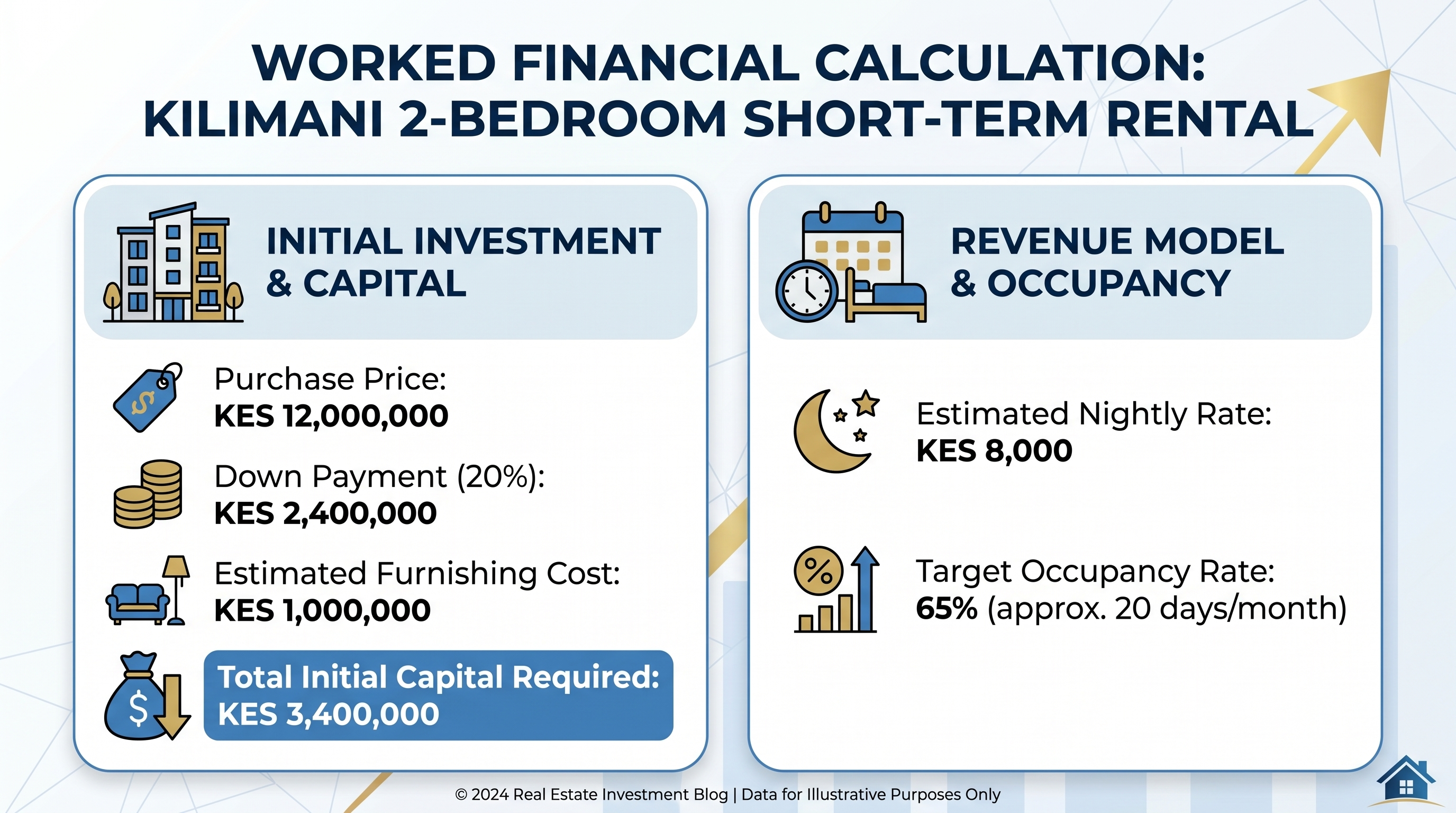
Note: Mortgage repayments will vary based on specific lender rates and terms.
3. Bridging the Distance with Data-Driven Decisions
Managing an investment from thousands of miles away often brings anxiety. Historically, diaspora buyers relied heavily on family members to manage their funds, which sometimes resulted in misaligned expectations or lost capital.
Today, a more analytical approach is required. By relying on vetted professionals and data platforms, investors can maintain complete oversight of their assets.
Using verified platforms ensures that properties meet stringent structural standards set by the Architectural Association of Kenya (AAK) and the National Construction Authority (NCA). Managing your purchase through verified channels ensures that your hard-earned money builds the legacy you envision.
Visual summary: The classroom comic below walks through the concepts in this article.
📖
Page 1 of 2Hani Explains It
4. Actionable Next Steps
Turning your goal of owning Nairobi real estate into reality requires executing the right steps with the right tools.
- Discover Opportunities: Begin by exploring verified properties in Nairobi or browse all properties across our network.
- Evaluate Your Financing: Review your financing options using our mortgage calculator and proceed to get a mortgage quote tailored for diaspora investors.
- Get Expert Guidance: For specific legal inquiries or custom return calculations, consult our AI assistant via Ask Hani.
5 Key Takeaways
- Monitor Currency Dynamics: Track the KES to USD exchange rate via the Central Bank of Kenya (CBK) to time your capital transfers effectively.
- Understand Yields: According to Rehani Soko property analytics, short-term rentals in prime Nairobi areas generate distinct yield advantages over traditional long-term leases.
- Evaluate Financing: Compare US personal financing costs against local Kenyan mortgage rates to find the most efficient source of capital.
- Stay Compliant: Always account for Kenya Revenue Authority (KRA) stamp duty and tax obligations in your initial ROI calculations.
- Use Trusted Platforms: Rely on verified professionals and digital tools to manage your property securely from abroad.
Important Disclaimer: This article is for informational purposes only and does not constitute financial, legal, or tax advice. Property markets and interest rates fluctuate. Always consult with certified financial advisors and legal professionals before making cross-border investment decisions.
Related Resources:
Further Reading
Frequently Asked Questions
- For Kenyans living in the diaspora, balancing the economic reality of their host country with their desire to invest back home requires careful planning. According to Rehani Soko market intelligence, high US interest rates often make borrowing locally in the United States expensive. Consequently, many diaspora investors are exploring Kenyan-based financing options tailored specifically for non-residents. By securing a diaspora mortgage through Kenyan institutions, investors can avoid the heavy burden of high US lending rates while matching their liabilities to the currency of their asset. Furthermore, Central Bank of Kenya (CBK) exchange rate trends can occasionally offer a favorable purchasing position when converting dollars to Kenyan Shillings. Ultimately, a clear process removes the uncertainty surrounding cross-border financing, allowing you to confidently build a high-yielding short-term rental portfolio in Nairobi.