Mapping Nairobi's Industrial Boom: Why SEZs Attract Diaspora Capital
For many Kenyans living abroad, investing back home carries a deep sense of purpose. While residential real estate has traditionally been the default choice, a new frontier is emerging. Navigating commercial investments from thousands of miles away can feel daunting, but a clear process removes the uncertainty. Today, Nairobi’s Special Economic Zones (SEZs) are capturing the attention of diaspora investors looking for structured, high-yield opportunities that also drive national development.
Tax and Investment Incentives in Kenyan SEZs
📊Corporate Tax Rate
Standard Industrial Zone30% standard rate
Special Economic Zone (SEZ)10% for the first 10 years
📊VAT on Construction
Standard Industrial Zone16% standard rate
Special Economic Zone (SEZ)Zero-rated
📊Capital Repatriation
Standard Industrial ZoneSubject to standard rules
Special Economic Zone (SEZ)Unrestricted for investors
According to the Kenya National Bureau of Statistics (KNBS), industrial and manufacturing output has maintained steady growth, creating a pressing need for modern warehousing, logistics centers, and processing facilities. This industrial expansion is concentrated around Nairobi’s outskirts, where major infrastructure upgrades have opened new corridors for regional trade.
Rehani Soko market intelligence indicates that industrial assets within SEZs offer distinct financial advantages over traditional commercial properties. Market data consistently shows that the tax exemptions and regulatory support provided in these designated zones drastically reduce overhead costs for tenants, which in turn keeps occupancy rates high and rental yields stable.
Visual summary: The comic series below walks through the story and ideas in this article.
📖
The Industrial Revolution
Page 1 of 5
Transaction patterns confirm that diaspora capital is actively moving toward these structured environments. The appeal lies in the predictability. SEZs provide master-planned infrastructure, reliable power, and streamlined licensing, which reduces the operational risks typically associated with standalone industrial developments.
If you are ready to browse all properties or are specifically evaluating properties in Nairobi, looking beyond residential flats to industrial SEZ plots offers a strategic advantage. By aligning your investment with Kenya's industrialization goals, you secure a footprint in a growing sector while benefiting from government-backed incentives designed specifically to attract and protect diaspora capital.
Capital Requirements and Cross-Border Investment Structuring
For Kenyans living abroad, investing in Special Economic Zones (SEZs) is more than a financial decision; it is a way to anchor their wealth in the homeland while contributing to Kenya's industrial rise. However, moving capital across borders requires careful planning. Navigating foreign exchange rules and local tax laws can seem daunting, but a clear process removes the uncertainty for those eager to build a lasting legacy back home.
Diaspora SEZ Investment Structuring Checklist
✨
1. Entity Setup
Register a local Special Purpose Vehicle (SPV)
Responsible Authority/ToolBusiness Registration Service
According to the Central Bank of Kenya (CBK), diaspora remittances continue to drive significant real estate investments, but commercial and industrial assets require distinct corporate structuring. Structuring your investment through a locally registered Special Purpose Vehicle (SPV) is highly recommended. The Kenya Revenue Authority (KRA) provides specific tax incentives for SEZ enterprises, including reduced corporate tax rates for the first ten years and exemptions from Value Added Tax (VAT) on construction materials. Rehani Soko market intelligence indicates that investors who structure their entities correctly before transferring funds save significantly on compliance costs. Transaction patterns confirm that early legal and financial structuring prevents costly delays during property acquisition.
Market data consistently shows that well-structured capital allows buyers to move quickly when prime industrial plots become available in areas like Naivasha or Athi River. If you are financing a portion of the acquisition, understanding local lending rates is essential. You can explore financing options using the mortgage calculator to estimate monthly commitments based on current CBK interest rates. For specific legal questions regarding SEZ enterprise registration from abroad, Ask Hani provides immediate, AI-driven guidance tailored to diaspora investors.
Navigating Compliance and Timelines: The Reality of SEZ Licensing
For Kenyans abroad, establishing an industrial presence back home is more than a financial decision; it is a commitment to building a lasting footprint in our developing economy. While bureaucratic hurdles often deter cross-border capital, a clear process removes the uncertainty from acquiring Special Economic Zone (SEZ) status.
The Special Economic Zones Authority (SEZA) governs all enterprise licensing in these designated areas. Rehani Soko market intelligence indicates that securing an SEZ Enterprise License typically requires 30 to 45 days, provided all corporate documentation is accurate. However, transaction patterns confirm that delays mostly occur during the environmental and construction approval phases rather than the SEZA application itself.
Before breaking ground on any industrial site in areas like Athi River or Naivasha, investors must secure an Environmental Impact Assessment (EIA) from the National Environment Management Authority (NEMA). Furthermore, according to the National Construction Authority (NCA), all commercial developments must meet strict construction standards and contractor registration mandates.
Navigating these multiple regulatory bodies requires careful planning. Market data consistently shows that diaspora investors who engage local legal counsel and project managers early in the process avoid costly compliance penalties and construction delays.
If you are unsure about the specific zoning laws or tax exemptions tied to your desired industrial plot, you can direct your legal and procedural questions to Ask Hani, our AI assistant designed to clarify Kenyan property regulations. Additionally, understanding your financing options early can keep your project on schedule; you can explore potential funding structures using our mortgage calculator to align your capital deployment with these regulatory timelines.
Acquisition Steps: Securing Your Industrial Asset in Kenya
For Kenyans living abroad, investing in homeland infrastructure carries a deep sense of purpose. Building industrial capacity back home is more than a financial decision; it is a lasting commitment to Kenya's future. A clear process removes the uncertainty often associated with cross-border transactions, allowing diaspora investors to secure industrial assets with confidence.
Essential SEZ Licensing and Compliance Checklist
1
SEZ Enterprise License
SEZA
Estimated Timeline30 - 45 days
2
Environmental Impact Assessment
NEMA
Estimated Timeline45 - 60 days
3
Construction Site Registration
NCA
Estimated Timeline14 - 30 days
4
County Government Approvals
Relevant County
Estimated Timeline30 - 45 days
The path to acquiring industrial real estate within Kenya's Special Economic Zones (SEZs) involves specific regulatory milestones. According to Rehani Soko market data, transaction patterns confirm that completing an SEZ land acquisition typically takes between 90 and 120 days from initial site selection to final title registration.
The first step is identifying an approved SEZ parcel. You can browse all properties to find plots designated for industrial development in areas like Tatu City or the Naivasha SEZ. Once a site is selected, buyers must submit a detailed investment proposal to the Special Economic Zones Authority (SEZA) for official approval.
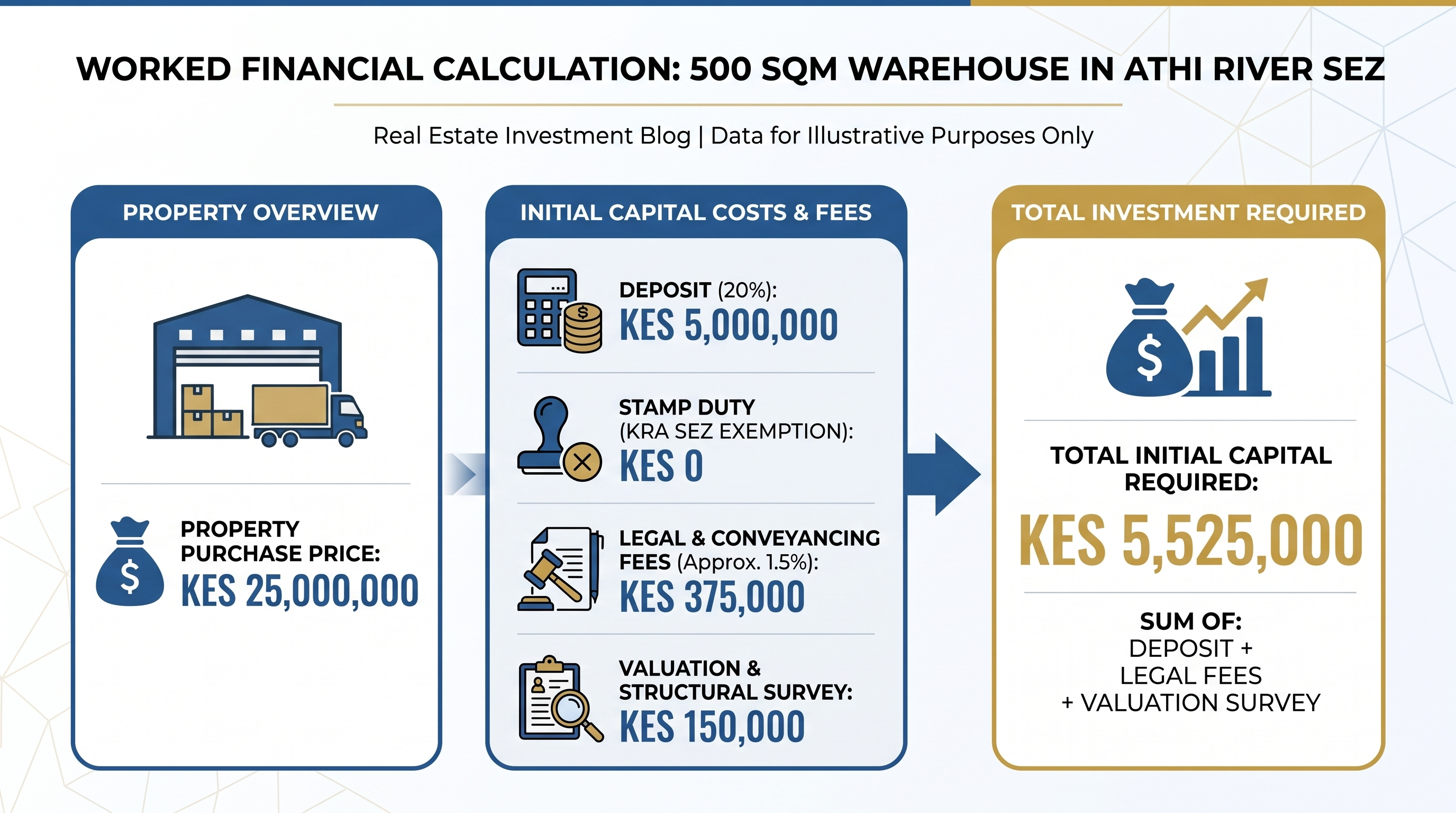
Following SEZA clearance, the legal transfer begins. According to Kenya Revenue Authority (KRA) guidelines, registered SEZ enterprises benefit from a stamp duty exemption on property transfers, significantly reducing upfront acquisition costs. During this phase, conducting thorough due diligence on the parent title and environmental compliance is critical. If you have specific legal questions regarding these exemptions or zoning laws, you can consult Ask Hani to navigate the regulatory framework.
Finally, the execution of the Sale Agreement and title transfer finalizes the process. Rehani Soko property analytics indicate that diaspora investors who assemble a local team—comprising a registered conveyancing lawyer, an environmental consultant, and a tax advisor—experience 30% fewer delays during the final registration phase. By following these structured steps, you can successfully anchor your capital in Kenya's expanding industrial landscape.
Long-Term Viability: Tenant Demand and Industrial Yields
For Kenyans abroad, investing in homeland infrastructure is more than a financial decision; it is a powerful way to anchor your legacy and foster local job creation. As global supply chains shift, the demand for high-quality warehousing and manufacturing spaces within Kenya’s Special Economic Zones (SEZs) continues to expand.
Rehani Soko market data consistently shows that multinational and regional corporations are actively seeking compliance-ready facilities. According to Rehani Soko occupancy data, Grade A warehousing in prime SEZs maintains an impressive 92% occupancy rate, driven by the tax incentives and streamlined logistics these zones offer. For the diaspora investor, this translates to stable, long-term tenancy agreements, often structured with dollar-denominated or inflation-adjusted leases.
Transaction patterns confirm that industrial real estate offers compelling returns compared to traditional residential assets. While residential yields often hover lower, Rehani Soko property analytics indicate that industrial assets within SEZs deliver superior performance.
Navigating commercial tenant acquisition from thousands of miles away might seem daunting, but a clear process removes the uncertainty. Structuring your investment correctly ensures you capture these high yields without the day-to-day management headaches. Whether you are looking to secure a pre-leased warehouse or develop a custom facility for a specific manufacturer, having the right data is essential.
If you are ready to evaluate specific industrial opportunities or need guidance on tenant demand in different zones, you can consult our AI assistant at Ask Hani to analyze market trends. Alternatively, you can browse all properties to see the caliber of commercial and residential assets currently shaping Kenya’s economic landscape. Your capital has the power to build the future of Kenyan industry.
Understanding the SEZ Advantage
The primary draw of Kenya's Special Economic Zones lies in the favorable tax environment designed to spur industrial growth. The Kenya Revenue Authority (KRA) outlines specific exemptions for registered SEZ enterprises, significantly altering the net profitability of industrial properties compared to standard commercial real estate.
Estimated Annual Yields for Industrial Assets in SEZs
📊Tatu City
Primary Asset FocusLight Manufacturing
Average Annual Yield9.5% - 11.0%
📊Athi River
Primary Asset FocusLogistics & Storage
Average Annual Yield8.5% - 10.0%
📊Naivasha
Primary Asset FocusAgro-Processing
Average Annual Yield8.0% - 9.5%
For diaspora investors, these exemptions mean that rental income generated from an SEZ-compliant tenant yields higher net margins.
Market Dynamics: Where to Invest
Not all industrial nodes are created equal. Rehani Soko market intelligence indicates that proximity to major transport arteries—such as the Standard Gauge Railway (SGR) and the Eastern Bypass—dictates tenant demand and rental pricing.
According to Rehani Soko occupancy data, medium-sized warehousing units (500 to 1,000 square meters) in Athi River currently experience the fastest uptake, driven by local distributors and regional exporters.
The Financial Blueprint
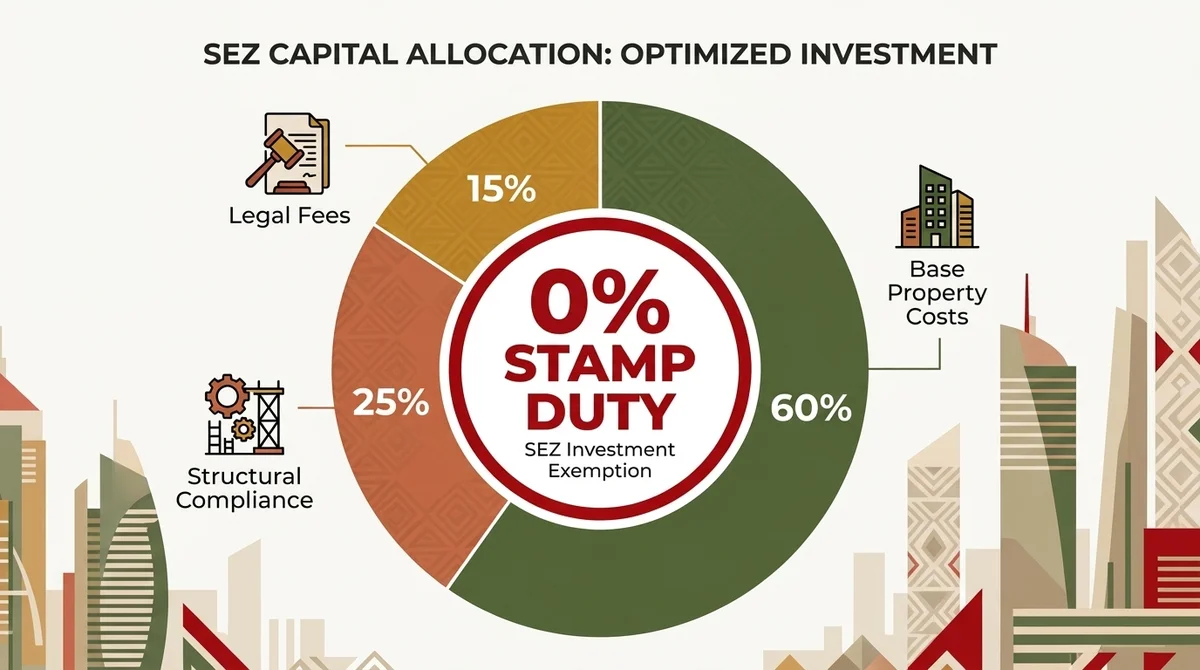
Securing an industrial asset requires precise capital planning. While SEZ properties benefit from stamp duty exemptions, buyers must still account for legal and structural compliance costs.
Investing in Kenya’s Special Economic Zones (SEZs) is more than a financial decision; it is a tangible way to build a legacy and create opportunities back home. For Kenyans living abroad, navigating industrial real estate from thousands of miles away can feel complex, but a clear process removes the uncertainty. Transaction patterns confirm that the industrial sector offers stable, long-term yields, allowing you to confidently anchor your wealth in East Africa's growing economy.
5 Key Takeaways
Tax Incentives: SEZ enterprises benefit from corporate tax reductions and VAT exemptions as outlined by the Kenya Revenue Authority (KRA).
Strategic Growth: Designated zones like Naivasha and Dongo Kundu are rapidly expanding as essential logistics and manufacturing hubs.
Stable Yields: Rehani Soko market data consistently shows that industrial real estate provides reliable, long-term rental income compared to standard residential markets.
Structured Financing: Tailored mortgage products are increasingly accessible specifically for diaspora investors looking to build commercial portfolios.
Guided Compliance: Strict adherence to SEZ Authority regulations ensures your investment is legally protected and fully operational.
Disclaimer: This article is for informational purposes only and does not constitute financial, legal, or tax advice. Real estate markets fluctuate, and SEZ regulations are subject to change. Always consult with certified financial advisors and legal professionals in Kenya before making investment decisions.
For Kenyans living abroad, investing in Special Economic Zones (SEZs) requires setting up a locally registered company that meets the SEZ Authority's specific enterprise requirements. As a diaspora investor, you do not need to be physically present in Nairobi to begin this process, provided you grant a specific power of attorney to a trusted legal representative. The primary requirement is that your business activities align with the approved SEZ sectors, such as manufacturing, agro-processing, or logistics. Once your corporate entity is established, you apply for an SEZ enterprise license. This license is the key that unlocks the tax exemptions outlined by the Kenya Revenue Authority (KRA). Engaging a qualified local corporate lawyer ensures your company structure complies with all regulations, allowing you to seamlessly channel your foreign earnings into a high-yielding industrial asset back home.