This analysis will examine how these specific infrastructure upgrades are creating fresh opportunities outside the capital. By looking at the hard numbers, you will learn exactly how transport links and new city statuses are impacting land and housing prices, helping you make informed decisions for your portfolio. You will discover how improved connectivity reduces commute times, lowers logistical costs, and ultimately drives up rental yields in previously overlooked neighborhoods. Whether you want to browse all properties or focus specifically on properties in Nairobi and its alternatives, understanding these shifts is essential for long-term wealth generation.
In this comprehensive market report, we will cover:
The Capital Exodus: Why Investors are Looking Beyond Nairobi
National Growth Trends: Contrasting Nairobi's Density with Regional Expansion
Mombasa's Infrastructure Renaissance: SGR and Bypass Impacts
Nakuru's Elevation: Highway Upgrades and New City Status
Portfolio Diversification: Balancing Nairobi Assets with Regional Growth
Visual summary: The comic series below walks through the story and ideas in this article.
📖
Nairobi Returns: Beyond The Bypass
Page 1 of 5
The Capital Exodus: Why Investors are Looking Beyond Nairobi
Nairobi has long been the undisputed center of Kenyan real estate, but transaction patterns confirm a noticeable shift in capital allocation. As land prices in the capital reach historic highs, property buyers are actively seeking fresh opportunities. According to the Kenya National Bureau of Statistics (KNBS), secondary urban centers are experiencing accelerated population growth, creating immense new housing demands outside the traditional Nairobi metropolitan area.
Property Search Interest by City 2025-2026
✨
Nairobi
72%
2026 Search Share65%
✨
Mombasa
14%
2026 Search Share19%
✨
Nakuru
8%
2026 Search Share11%
✨
Kisumu
6%
2026 Search Share5%
For Kenyans living abroad, building a home or an investment portfolio back home represents a deeply personal connection to our roots. Fortunately, a clear process removes the uncertainty of investing from afar. Many diaspora investors are now realizing that the dream of property ownership does not have to be confined to Nairobi's city limits. The expansion of major highways and regional airports is directly connecting previously overlooked areas to national commerce.
Rehani Soko market intelligence indicates that while prime Nairobi residential yields have stabilized, emerging cities are offering highly competitive entry points. Investors who browse all properties on our platform are increasingly filtering for locations like Nakuru, Kisumu, and Eldoret, where infrastructure upgrades are actively transforming the landscape.
Market data consistently shows that infrastructure is the primary catalyst for this outward movement. While many buyers still look for properties in Nairobi for capital preservation, the search for higher rental yields is pushing capital into these secondary cities. As new roads are paved and utility grids expand, the traditional boundaries of prime Kenyan real estate are being rapidly rewritten.
National Growth Trends: Contrasting Nairobi's Density with Regional Expansion
As Nairobi continues to experience intense urbanization, the capital's property landscape is becoming increasingly dense. For many Kenyans in the diaspora, the dream of owning spacious land back home often feels constrained by the capital's premium costs. However, market data consistently shows that strategic infrastructure investments are unlocking immense value in Kenya's secondary cities, creating new avenues for wealth generation.
Regional Real Estate Market Indicators and Prices
💰Nairobi (Kilimani/Kileleshwa)
Average Entry Price (KES)12,500,000
Estimated Rental Yield5.5% - 6.5%
Primary Growth DriverCorporate & Expat Demand
💰Nakuru City
Average Entry Price (KES)6,800,000
Estimated Rental Yield7.0% - 8.2%
Primary Growth DriverHighway Expansion & City Status
💰Kisumu City
Average Entry Price (KES)7,200,000
Estimated Rental Yield6.8% - 7.9%
Primary Growth DriverPort Revitalization & Lake Front
💰Eldoret Town
Average Entry Price (KES)5,900,000
Estimated Rental Yield7.2% - 8.5%
Primary Growth DriverBypass Roads & Agribusiness
According to the Kenya National Bureau of Statistics (KNBS), population growth in urban centers outside the capital is accelerating, driven by new road networks, bypasses, and improved county services. Transaction patterns confirm this shift; savvy investors are actively diversifying their portfolios into Nakuru, Eldoret, and Kisumu. Rehani Soko market intelligence indicates that these emerging hubs offer exceptional returns for early entrants, contrasting sharply with the compressed rental yields found in traditional Nairobi suburbs.
While finding properties in Nairobi remains a priority for high-density commercial investors, residential buyers are increasingly looking outward. For those living abroad, a clear process removes the uncertainty of investing in unfamiliar counties. Securing a plot in a growing secondary city provides a tangible connection to home, offering both the space for a family compound and the promise of long-term capital appreciation.
This regional expansion represents a structural shift in Kenya's real estate market, guided by strict zoning laws supported by the Architectural Association of Kenya (AAK) to ensure sustainable development. By looking beyond the capital's borders, you can browse all properties across the country to find opportunities that align with your financial goals and your deep desire to build a lasting, spacious legacy back home.
Mombasa's Infrastructure Renaissance: SGR and Bypass Impacts
Mombasa is experiencing a major transformation that extends far beyond its traditional identity as a tourist destination. The integration of the Standard Gauge Railway (SGR) and the ongoing completion of the Dongo Kundu Bypass have fundamentally altered the coastal property landscape. For the Kenyan diaspora, watching the coastal region modernise inspires a deep sense of pride and offers a compelling reason to build wealth back home.
Market data consistently shows that infrastructure dictates real estate viability. According to Rehani Soko property analytics, areas adjacent to these new transport corridors have seen a marked increase in buyer inquiries over the past two years. The SGR terminus in Miritini, for example, has shifted commercial and residential focus inland, reducing the historical over-reliance on Mombasa Island itself. This decentralisation is creating fresh residential hubs to support the local workforce.
Similarly, the Dongo Kundu Bypass is opening up the South Coast by providing a highly anticipated alternative to the Likoni Ferry. Transaction patterns confirm that early-stage investors are actively acquiring parcels in Kwale County and mainland Mombasa. They are positioning themselves for future value appreciation as freight and passenger transit times decrease significantly across the region.
Navigating these emerging coastal nodes requires careful planning, but a clear process removes the uncertainty for buyers. Investors must evaluate how these new roads and rail links affect local zoning laws, accessibility, and long-term rental yields.
To explore these shifting coastal opportunities, you can browse all properties across Kenya's secondary cities. If you need specific guidance on how infrastructure projects impact land use regulations in Mombasa County, Ask Hani can provide instant, data-backed answers to your market questions.
Nakuru's Elevation: Highway Upgrades and New City Status
Nakuru's recent elevation to city status has fundamentally altered its real estate trajectory. The ongoing expansion of the Nairobi-Nakuru-Mau Summit highway is a primary driver of this transformation, cutting travel times and opening up previously inaccessible residential nodes. For Kenyans in the diaspora looking to secure a piece of home, Nakuru offers a compelling blend of heritage and rapid modernization, presenting a unique opportunity to invest before prices peak.
According to the Kenya National Bureau of Statistics (KNBS), Nakuru's economic output has accelerated significantly over the past three years, driven by infrastructure investments and agricultural processing. This economic expansion directly impacts housing demand. Rehani Soko market intelligence indicates that land prices in areas adjacent to the highway corridor have seen a 14% year-over-year increase. Furthermore, rental demand in middle-income neighborhoods has surged as businesses relocate to the new city.
Market data consistently shows that infrastructure projects act as catalysts for property appreciation. As the highway progresses, transaction patterns confirm a steady shift of investor capital toward Nakuru's emerging suburbs. For those planning their investment strategy, a clear process removes the uncertainty often associated with buying property from abroad. You can browse all properties on our platform to see current listings in these high-growth areas.
While Nakuru promises exceptional returns for early entrants, navigating zoning laws in a newly designated city requires careful due diligence. According to the National Construction Authority (NCA), compliance checks on new developments in Nakuru have increased by 22% this year. If you have questions about specific regulations or need to verify a developer's credentials, you can consult Ask Hani, our AI assistant, for immediate guidance.
Portfolio Diversification: Balancing Nairobi Assets with Regional Growth
For Kenyans living abroad, building a lasting legacy back home often begins with acquiring property in the capital. However, as infrastructure connects the country, spreading investments across different counties is becoming the standard for smart wealth creation. While navigating multiple regional markets might seem daunting from afar, a clear process removes the uncertainty of investing outside the capital.
Rehani Soko market intelligence indicates that a blended approach—holding stable assets in Nairobi while capturing rapid capital appreciation in emerging hubs like Nakuru or Mombasa—protects your investments against localized economic shifts. Furthermore, market data consistently shows that portfolios containing both primary and secondary city properties achieve more stable long-term cash flows. Transaction patterns confirm that diaspora investors are increasingly adopting this dual-market strategy to maximize their returns while maintaining a strong connection to their roots.
(Note: Yield projections based on Rehani Soko property analytics)
Diversifying your holdings does not mean starting from scratch. Many investors use the equity built in their Nairobi properties to fund acquisitions in growing secondary cities. If you are considering this strategy and need to understand the financial implications or legal requirements across different counties, you can consult our AI assistant at Ask Hani for immediate guidance.
Whether you are looking to secure a retirement home near the coast or a high-yield student rental in Nakuru, securing the right financing is critical. To explore your funding options for regional expansion, get a mortgage quote tailored to your specific investment profile. By balancing the proven stability of Nairobi with the exciting infrastructure-led growth of Kenya's secondary cities, you create a resilient portfolio ready for the future.
August 06, 2026 | Nairobi, Kenya
For years, the Kenyan real estate narrative has been dominated by the capital. However, a profound transformation is occurring beyond the city limits. Driven by a deep desire to build a lasting legacy back home, diaspora investors are increasingly looking at Kenya's secondary cities. The expansion of highway networks, regional airports, and standard gauge railways is fundamentally altering property dynamics in areas like Nakuru, Kisumu, and Eldoret.
Mombasa Transport Corridors and Real Estate Demand
✨
Miritini
SGR Main Terminus
Rehani Soko Demand TrendAccelerating
✨
Likoni South
Dongo Kundu Bypass
Rehani Soko Demand TrendHigh Growth
✨
Changamwe
Port Access Roads
Rehani Soko Demand TrendSteady Commercial
According to the Kenya National Bureau of Statistics (KNBS), urban population growth in these secondary nodes is accelerating, creating a sustained demand for housing and commercial spaces. For Kenyans living abroad, this presents a unique chance to invest in their homeland's future while securing valuable assets. Market data consistently shows that where major infrastructure goes, property appreciation closely follows.
The Financial Realities of Emerging Markets
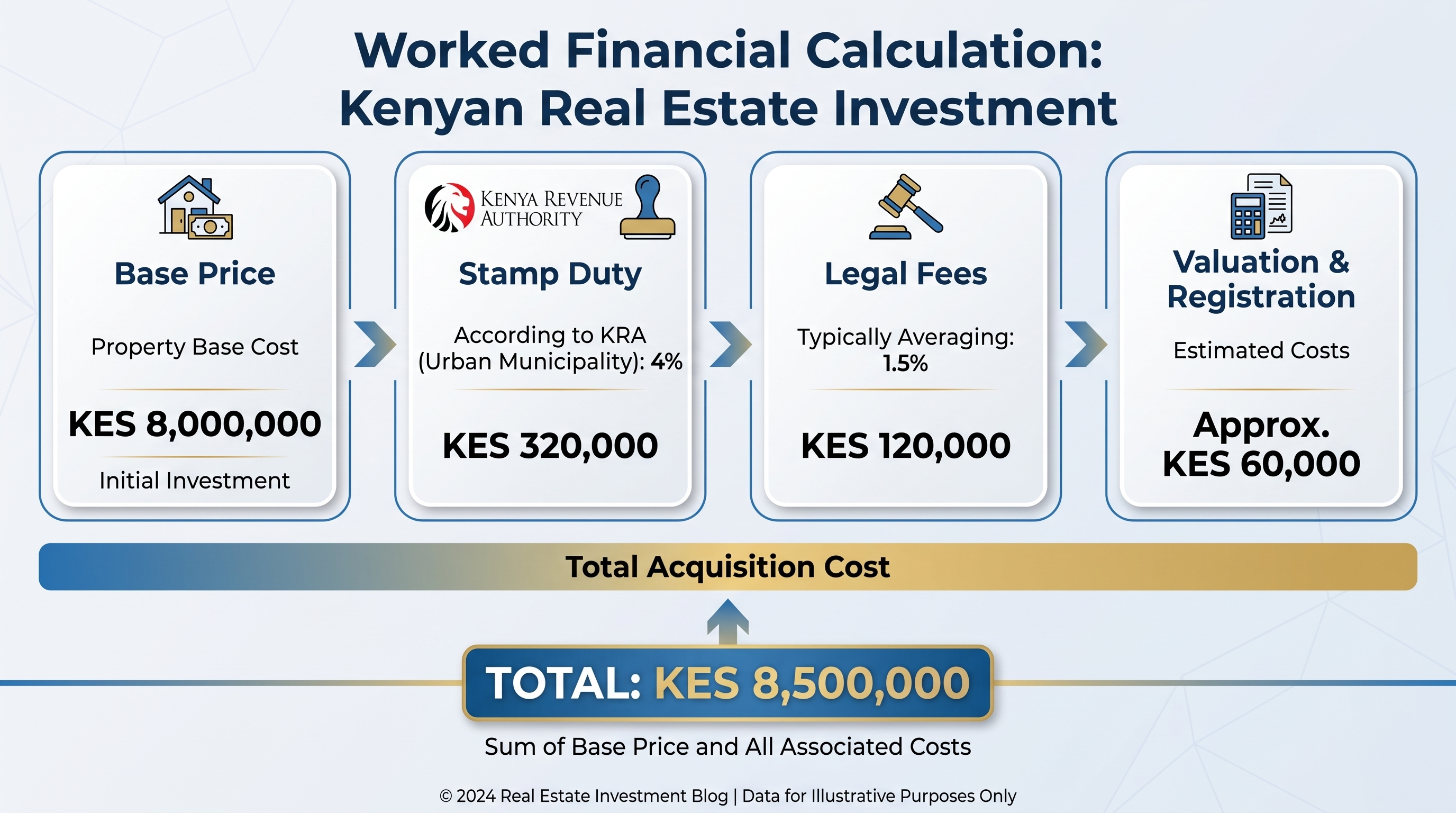
When assessing these growing municipalities, maintaining an analytical approach is essential. The lower entry price points in secondary cities compared to the capital offer an attractive proposition, but buyers must account for all statutory costs to avoid surprises. Transaction patterns confirm that investors who plan for full acquisition costs experience smoother property transfers.
Worked Financial Calculation:
Understanding these figures ensures you are fully prepared. A clear process removes the uncertainty of investing from thousands of miles away.
Nakuru Real Estate Performance Indicators by Area
💰Milimani
Property Type4-Bed Villas
Year-Over-Year Price Growth11.5%
Average Rental Yield6.2%
💰Naka
Property Type3-Bed Apartments
Year-Over-Year Price Growth14.2%
Average Rental Yield7.5%
💰Lanet
Property TypePrime Land
Year-Over-Year Price Growth16.8%
Average Rental YieldN/A
💰Kiamunyi
Property Type3-Bed Maisonettes
Year-Over-Year Price Growth13.4%
Average Rental Yield6.8%
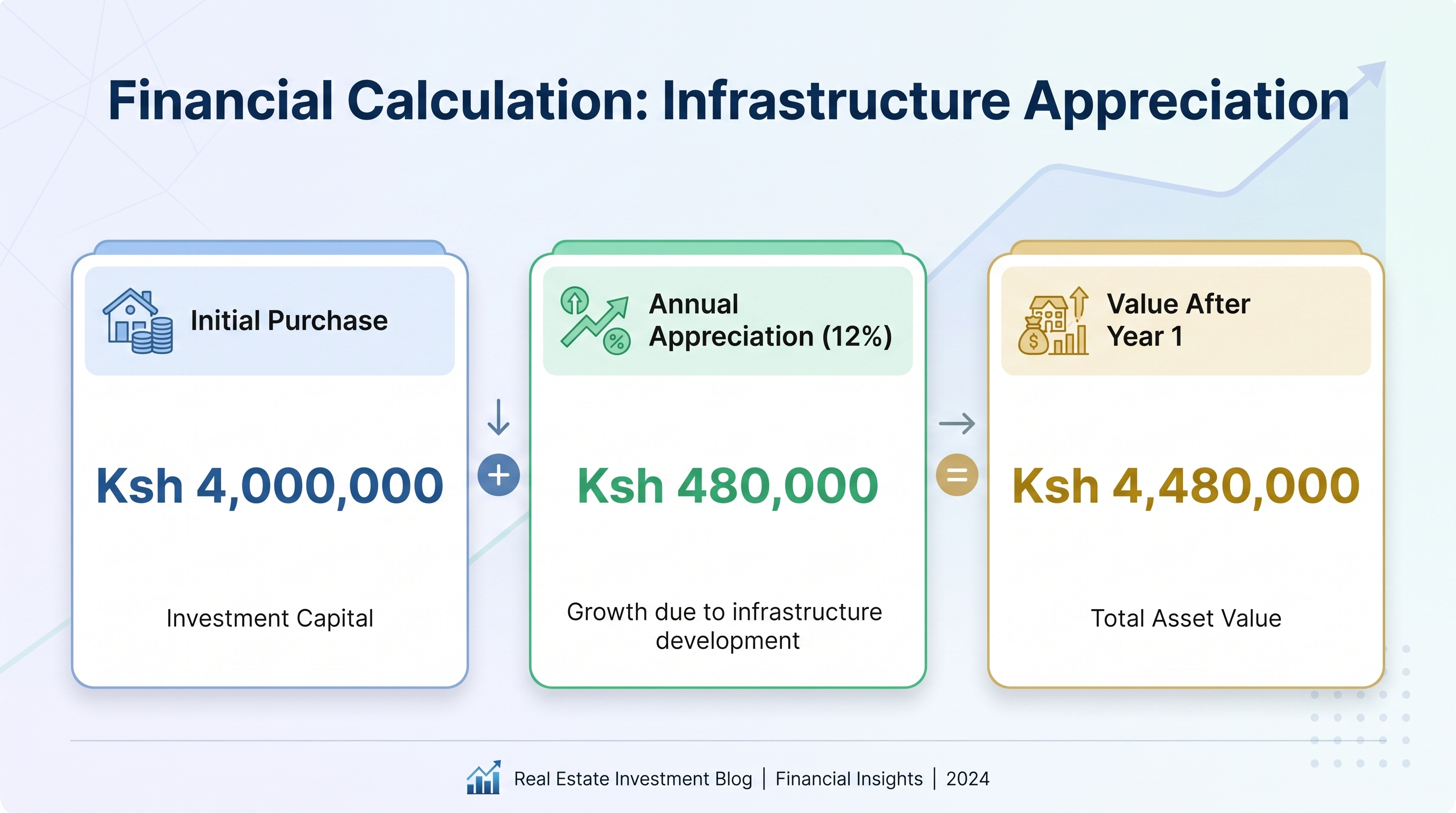
Worked Financial Calculation:
Area Comparison: Finding Your Investment Node
While many investors naturally look for properties in Nairobi, looking outward reveals distinct advantages. Each secondary city offers a unique economic driver. Nakuru's recent elevation to city status has spurred a wave of commercial development. Kisumu is capitalizing on the blue economy and cross-border trade, while Eldoret remains an agricultural and industrial powerhouse.
Rehani Soko market intelligence indicates that rental yields in these regions are stabilizing as the quality of housing improves to meet the standards of returning diaspora and local professionals. By comparing these areas, you can identify neighborhoods that align with your long-term goals and potentially secure exceptional returns as the infrastructure matures.
Actionable Next Steps for the Diaspora Investor
Taking the step to invest back home is a proud moment. It is a tangible connection to your roots and a commitment to your family's financial future. To navigate this landscape safely, it is critical to rely on verified data and professional guidance. Ensure that any development you consider complies with the Architectural Association of Kenya (AAK) standards and that contractors are properly vetted by the National Construction Authority (NCA).
Projected Portfolio Yield Variations by Asset Mix
📊100% Nairobi Assets
Projected Annual Yield5.5% - 6.5%
Primary Growth DriverRental stability
📊70% Nairobi / 30% Regional
Projected Annual Yield6.8% - 7.5%
Primary Growth DriverInfrastructure impact
📊50% Nairobi / 50% Regional
Projected Annual Yield7.6% - 8.2%
Primary Growth DriverRapid urbanization
To begin your journey, you can browse all properties across Kenya's emerging and established markets. If you need clarity on legal requirements or market trends, reach out to Ask Hani for immediate, data-backed answers.
Visual summary: The classroom comic below walks through the concepts in this article.
📖
Hani Explains It
Page 1 of 2
5 Key Takeaways
Major road networks are the primary catalysts for secondary city property growth.
Nakuru and Eldoret show strong yield potential for new residential developments.
Entering the market during the infrastructure construction phase maximizes appreciation.
According to the Kenya National Bureau of Statistics (KNBS), population shifts are increasing housing demand in these regional hubs.
Verified market intelligence is essential for safe diaspora investments.
Important Disclaimer: This market analysis is for informational purposes only and does not constitute financial advice. Property values fluctuate, and past performance does not guarantee future results. Always conduct independent due diligence.
According to Rehani Soko market intelligence indicates that while Nairobi remains the commercial hub, secondary cities like Nakuru, Kisumu, and Eldoret are experiencing accelerated property demand. This shift is primarily driven by recent national infrastructure upgrades, including expanded highway networks and improved regional airports. For Kenyans in the diaspora looking to build a connection back home, these emerging markets offer lower entry prices compared to the capital. Market data consistently shows that as connectivity improves, commercial and residential real estate values in these nodes appreciate steadily. Furthermore, according to the Kenya National Bureau of Statistics (KNBS), population growth in these urban centers is creating sustained demand for quality housing. Investors can achieve exceptional returns by identifying neighborhoods adjacent to new transport corridors before they fully mature.