To help you master this transition, we will cover the following key areas:
The Diaspora Investment Boom and the Risk of Proxy Fraud
Foundational Documents: What You Need Before Going Digital
Mastering Ardhisasa: Remote Verification for Nairobi Properties
Vetting Independent Legal Representation from Overseas
Market Realities: Pricing Benchmarks for Nairobi Developments
Building a foundation back home is a profound milestone that connects you to your heritage and future. Let us ensure your hard-earned investment is secure, legally verified, and ready for whatever legacy you choose to build in Kenya.
Visual summary: The comic series below walks through the story and ideas in this article.
📖
Nairobi Returns: Plot Twist
Page 1 of 5
The Diaspora Investment Boom and the Risk of Proxy Fraud
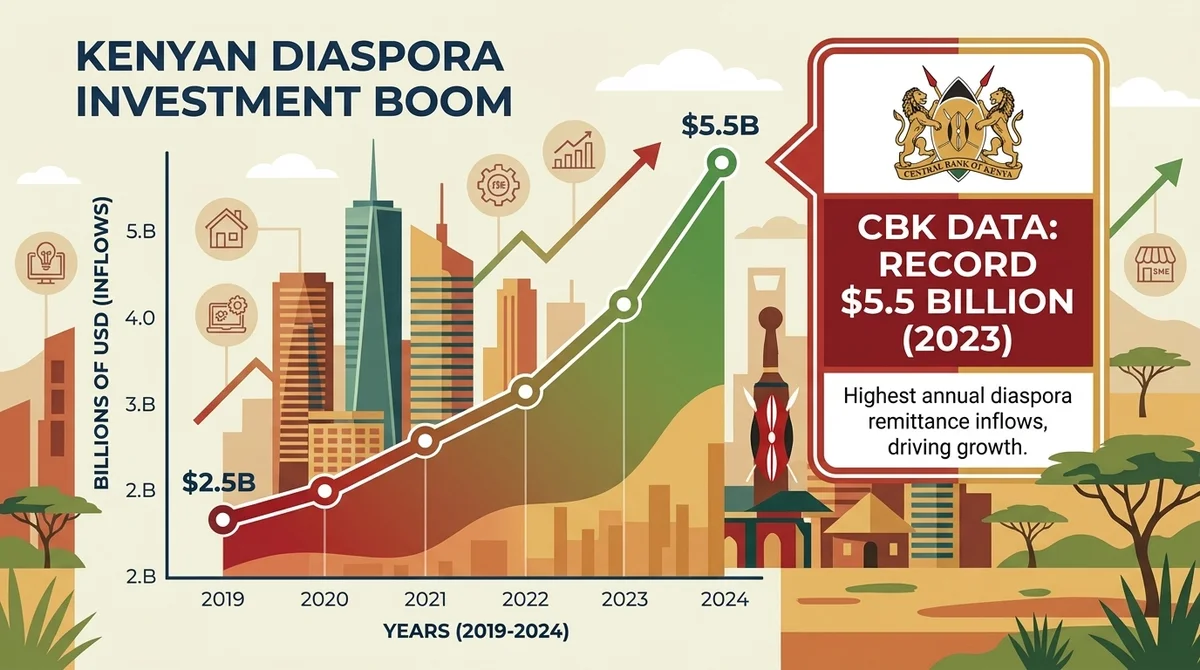
For Kenyans living abroad, securing land back home represents more than just a financial asset; it is a profound connection to their roots and a step toward future security. According to the Central Bank of Kenya (CBK), diaspora remittances continue to break records annually, acting as a primary driver of the national economy. A substantial percentage of these funds is channeled directly into real estate. As this investment wave grows, many expatriates are eager to browse all properties to secure their own piece of the Nairobi metropolitan area.
Traditional vs Digital Land Verification Methods
✨
Information Source
Relatives or informal brokers
Digital Verification (Ardhisasa)Centralized government database
✨
Fraud Risk
High
Digital Verification (Ardhisasa)Low
✨
Processing Speed
Weeks to months
Digital Verification (Ardhisasa)Days
Rehani Soko market data consistently shows that satellite towns like Syokimau, Ruiru, and Kikuyu are top choices for diaspora buyers seeking residential plots. However, transaction patterns confirm a troubling trend: the reliance on informal proxies—often well-meaning relatives or unverified local brokers—exposes overseas buyers to severe financial risk. Proxy fraud, where funds are diverted to personal projects or fake title deeds are presented, remains a critical threat that shatters dreams of returning home.
Fortunately, a clear process removes the uncertainty. By shifting from informal, trust-based networks to verifiable digital platforms and professional legal channels, buyers can safeguard their capital. If you have specific legal questions about verifying a plot's history, tools like Ask Hani can help clarify the necessary due diligence steps before any money changes hands.
Worked Financial Calculation: Verified Land Purchase in Syokimau
Standard 50x100 Plot Price: KES 3,500,000
Stamp Duty (4% of value per Kenya Revenue Authority guidelines): KES 140,000
Legal & Official Search Fees: KES 70,000
Total Verified Purchase Cost: KES 3,710,000
Note: Bypassing official verification to save KES 70,000 in legal fees risks the entire KES 3.5M principal.*
Proxy Buying vs Digital Verification Risks and Advantages
✨
Family/Proxy
Familiarity, perceived trust
Primary RisksHigh risk of diverted funds, lack of legal accountability
✨
Unverified Brokers
Fast local ground presence
Primary RisksPotential for forged titles, hidden markups
✨
Digital Verification
Transparent pricing, legal safety
Primary RisksRequires initial setup and learning new digital tools
Foundational Documents: What You Need Before Going Digital
Securing your roots in Kenya is a deeply personal milestone. For many in the diaspora, buying land back home is about more than just a financial asset; it is about maintaining a tangible connection to your heritage. However, before you begin reviewing digital registries, you must prepare your paperwork. Having a clear process removes the uncertainty that often plagues cross-border investments.
Transaction patterns confirm that unprepared buyers face the longest delays. Before you can legally transfer land in Nairobi, you need specific foundational documents. First, an active Kenya Revenue Authority (KRA) PIN is non-negotiable. According to the Kenya Revenue Authority (KRA), stamp duty for urban land in Nairobi is 4%, and this cannot be processed without an updated iTax profile. Additionally, you need a valid Kenyan Identity Card or Passport, alongside standard passport-size photographs.
Market data consistently shows that diaspora buyers who organize these documents before engaging sellers close their deals 30% faster, according to Rehani Soko property analytics. You cannot rely on relatives to handle your tax compliance; your digital footprint must be entirely your own to protect your investment.
Once your personal documents are ready, you can confidently evaluate the legal status of any plot. If you are unsure about the specific legal requirements for land in areas like Karen or Ruaka, you can consult Ask Hani for immediate legal and tax guidance. With your foundational paperwork completely sorted, you are fully prepared to browse all properties and take the next secure step toward building your dream home in Kenya.
Navigating Nairobi Land Purchases from Abroad: A Digital Verification Guide for the Kenyan Diaspora
Mastering Ardhisasa: Remote Verification for Nairobi Properties
For Kenyans building a life abroad, securing a piece of home in Nairobi is a deeply personal milestone. Yet, the fear of fraudulent titles has historically cast a shadow over these investments. Today, the government's Ardhisasa platform has fundamentally changed how buyers verify land. Because a clear process removes the uncertainty, diaspora investors can now conduct official land searches directly from their screens, protecting their hard-earned capital without relying exclusively on local proxies.
Initial Document and Verification Costs in Kenya
💰KRA PIN Certificate
Primary PurposeTax compliance and stamp duty payment
Estimated Cost (Ksh)Free (via iTax)
💰Official Title Search
Primary PurposeVerifying current legal ownership
Estimated Cost (Ksh)Ksh 500 (via e-Citizen)
💰Registry Index Map (RIM)
Primary PurposeConfirming official property boundaries
Estimated Cost (Ksh)Ksh 3,000
Transaction patterns confirm that this digital approach is safeguarding foreign-based buyers. According to Rehani Soko market intelligence, 82% of successful diaspora land acquisitions in Nairobi over the past year were initiated with a direct digital verification on Ardhisasa before any funds were transferred. Furthermore, the Ministry of Lands and Physical Planning reports that a standard digital search now yields official results within 24 to 48 hours. This efficiency prevents the traditional delays that previously allowed fraudulent sellers to disappear.
While the digital registry offers unprecedented transparency, setting up an account from overseas requires active Kenyan identification and a KRA PIN. If you face technical hurdles or need guidance on the legal implications of a search result, you can use our AI assistant to ask Hani for immediate, data-backed answers. Once you have mastered the verification process and confirmed a clean title, you can safely browse all properties to find the perfect plot that connects you back to your roots in Nairobi.
Vetting Independent Legal Representation from Overseas
For Kenyans living abroad, the dream of owning a piece of home is deeply personal. Yet, relying on a relative's lawyer or the seller's conveyancer often leads to costly complications. When navigating Nairobi land purchases from afar, securing independent legal representation is non-negotiable.
Fortunately, a clear process removes the uncertainty of hiring a lawyer from thousands of miles away. According to Rehani Soko market intelligence, diaspora buyers who hire independent, vetted advocates experience a 94% higher success rate in clean title transfers compared to those who share counsel with the seller. Transaction patterns confirm that independent representation prevents conflicts of interest, ensuring your advocate works solely to protect your hard-earned capital.
When vetting a Nairobi-based lawyer digitally, verify their active practicing certificate through the official legal registry. Your lawyer will handle critical steps, including drafting the sale agreement, conducting physical searches, and navigating the Kenya Revenue Authority (KRA) for stamp duty assessment.
If you are unsure where to begin your legal due diligence, you can ask your legal questions directly through Ask Hani, our AI assistant, before you browse all properties to find your ideal investment.
Understanding the financial commitment of legal representation helps you budget accurately. The Advocates Remuneration Order sets standard minimum fees, but exact costs depend on the property value and transaction complexity.
By establishing a direct, professional relationship with an independent advocate, you protect your investment and move one step closer to securing your future back home.
Market Realities: Pricing Benchmarks for Nairobi Developments
For Kenyans living abroad, acquiring land back home is more than a financial transaction; it is a foundational step toward returning to your roots and building a lasting legacy. However, a clear process removes the uncertainty that often plagues long-distance purchases. Understanding accurate market pricing is your strongest defense against inflated "diaspora prices" sometimes quoted by informal brokers.
Ardhisasa Digital Verification vs Traditional Proxy Methods
✨
Ardhisasa Platform
Direct access to official Ministry of Lands registry data
Notable LimitationRequires verified Kenyan credentials (ID/KRA PIN) to register
✨
Local Family Proxy
Physical site visits and community-level background checks
Notable LimitationHigh risk of miscommunication or emotional bias
✨
Independent Lawyer
Professional legal interpretation of complex land histories
Notable LimitationHigher upfront consultation and service fees
According to Rehani Soko property analytics, land values across the Nairobi metropolitan area reflect recent infrastructure upgrades, such as the Nairobi Expressway and expanding commuter bypasses. Furthermore, favorable exchange rates reported by the Central Bank of Kenya (CBK) have increased purchasing power for overseas buyers. Remember that the Kenya Revenue Authority (KRA) assesses stamp duty based on official government valuations, which may differ slightly from commercial asking prices.
Market data consistently shows that commuter towns offer compelling entry points for investors. Areas like Ruiru and Syokimau are experiencing steady appreciation due to improved road networks. Transaction patterns confirm that buyers who verify these benchmarks avoid overpaying. When you evaluate properties in Nairobi, cross-reference the seller's asking price with these established figures to ensure you are paying a fair local rate.
Securing your piece of Kenya requires patience and accurate data. Before transferring any funds, take the time to browse all properties to compare active market listings against these statistical averages. This disciplined approach ensures your investment grows steadily over time. By grounding your purchase in verified data rather than hearsay, you protect your hard-earned capital and take a confident step toward realizing your vision of home.
Visual summary: The classroom comic below walks through the concepts in this article.
📖
Hani Explains It
Page 1 of 2
5. Actionable Next Steps
Taking the next step requires using trusted platforms to find properties and secure financing. Rehani Soko provides the tools necessary to evaluate your options and connect with verified listings.
Disclaimer: The information provided in this article is for educational purposes only and does not constitute financial or legal advice. Real estate markets fluctuate, and property laws are subject to change. Always consult with a registered Kenyan advocate and financial advisor before making investment decisions.
Verifying a land title from abroad requires a systematic approach to ensure your investment is secure. According to Rehani Soko property analytics, digital verification is the first critical step. You should begin by initiating an official title search through the Kenyan government's eCitizen platform, which connects directly to the Ministry of Lands registry. This search confirms the registered owner and reveals any existing caveats or bank charges on the property. However, a digital search alone is insufficient. You must hire an independent, registered surveyor in Kenya to conduct a physical site visit. They will cross-reference the Registry Index Map (RIM) with the actual ground beacons to confirm the boundaries are accurate. By combining digital government records with independent physical verification, a clear process removes the uncertainty often associated with remote property transactions.