Back to Newsroom 
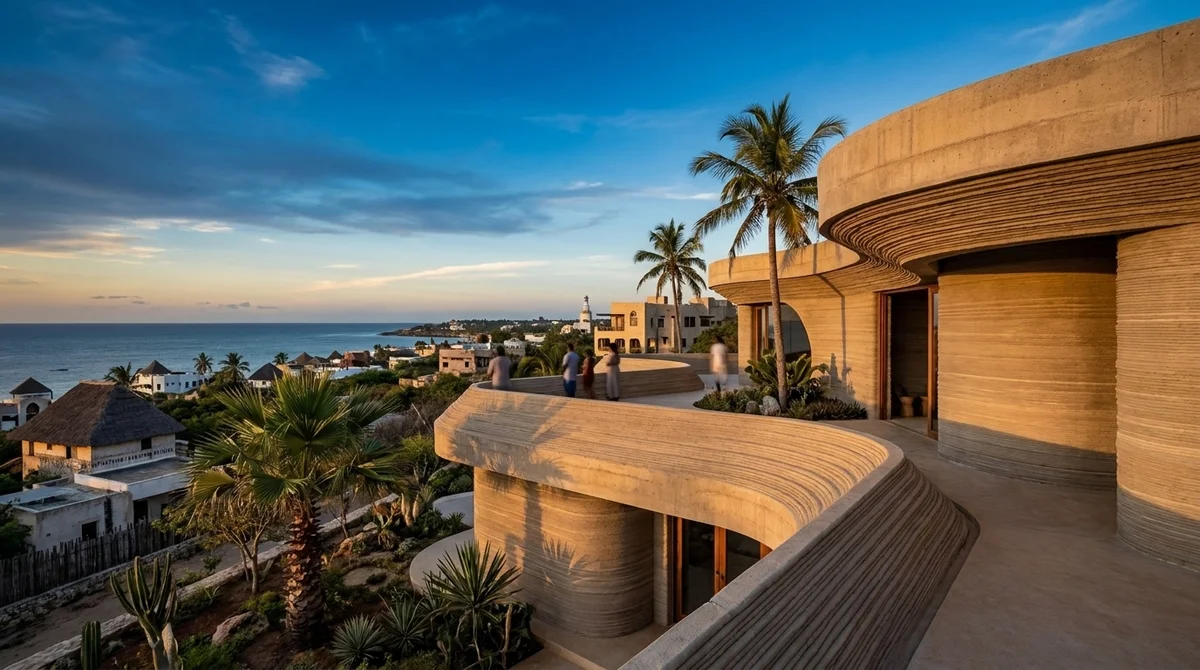
Addressing Kenya's Housing Deficit with 3D-Printed Communities in Kilifi
According to the Kenya National Bureau of Statistics (KNBS), the nation faces a persistent annual housing deficit of over 200,000 units. To bridge this gap, developers are turning to alternative building technologies, with Kilifi quickly emerging as a prime destination for 3D-printed communities. For diaspora investors longing to establish roots along the beautiful Kenyan coast, this technological shift offers a highly efficient entry point into the real estate market.
Traditional vs. 3D-Printed Construction Metrics in Kilifi
1
Wall Erection Time
Traditional Masonry4 to 6 Months
→
3D-Printed Construction10 to 14 Days
2
Material Waste
Traditional Masonry15% to 20%
→
3D-Printed ConstructionUnder 5%
3
Structural Lifespan
Traditional Masonry50+ Years
✓
3D-Printed Construction50+ Years
While adopting new construction methods might feel intimidating from thousands of miles away, a clear process removes the uncertainty. Rehani Soko market intelligence indicates that 3D printing significantly accelerates project delivery in growing coastal nodes like Vipingo and Bofa. Instead of waiting up to a year for traditional block-and-mortar masonry, early adopters are seeing structural walls completed in a matter of weeks.
Market data consistently shows that drastically reducing construction timelines directly lowers labor costs and early holding expenses. For those looking to generate vacation rental income, faster completion means entering the market months sooner. This speed to market positions property owners to capture exceptional returns during Kilifi’s peak December and Easter holiday seasons.
Rates on the Rehani network ·
Typical property in this story: Kilifi apartment for Sale. Published Bank product page rate 8.99% (https://www.stanbicbank.co.ke/kenya/personal/products-and-services/borrow-for-your-needs/see-all-home-loans/affordable-housing).
Affordable · Affordable Housing (KES)
Stanbic Kenya
Est. payment
KES 67,081
/ month
Rate
8.99%
Term
25.0 yrs
Down
0.0%
Ordinary Home Loan (KES)
Stanbic Kenya
Est. payment
KES 102,881
/ month
Rate
16.5%
Term
20.0 yrs
Down
10.0%
Visual summary: The comic series below walks through the story and ideas in this article.
📖
Page 1 of 5Nairobi Returns: The Kilifi Print
According to the National Construction Authority (NCA), alternative building technologies must meet strict structural standards, ensuring these modern homes are as durable and safe as conventional builds. Furthermore, transaction patterns confirm that buyer interest in eco-friendly, climate-resilient homes is rising sharply across the coastal region. The precision of 3D printing also reduces human error, a common concern for absentee investors building in Kenya.
If you are ready to explore coastal investments, you can browse all properties to find suitable, serviced land in Kilifi. Should you have specific questions about local zoning laws or NCA approvals for alternative builds, consult our AI assistant, Ask Hani, for instant, localized guidance.
Breaking Down the Numbers: Construction Costs vs. Final Purchase Price
For Kenyans abroad looking to invest back home, navigating construction expenses from thousands of miles away can feel daunting. However, having a clear process removes the uncertainty. When evaluating 3D-printed homes in Kilifi, understanding exactly where the savings occur is essential for setting realistic budget expectations.
Estimated Cost Distribution for a Standard 3-Bedroom Home in Kilifi
💰Foundation & Site Preparation
Traditional Build (% of Total)15%
3D-Printed Build (% of Total)15%
💰Superstructure (Walls)
Traditional Build (% of Total)25%
3D-Printed Build (% of Total)18%
💰Roofing & Windows
Traditional Build (% of Total)20%
3D-Printed Build (% of Total)20%
💰Interior Finishes & Plumbing
Traditional Build (% of Total)40%
3D-Printed Build (% of Total)47% (Relative proportion)
According to Rehani Soko property analytics, the primary financial advantage of 3D printing lies in the superstructure. The technology extrudes concrete layer by layer, drastically reducing material waste and labor hours. Rehani Soko market data consistently shows that 3D-printed wall structures in Kilifi cost approximately 20% to 30% less to build than traditional stone masonry.
Yet, buyers must look at the complete picture. The walls only make up a fraction of a completed house.
Transaction patterns confirm that while you save significantly on the walls, other expenses remain fixed. According to the National Construction Authority (NCA), foundation, roofing, and electrical standards remain identical across both methods. Therefore, the final purchase price of a completed 3D-printed home is typically 10% to 15% lower than a conventional build—not the 50% discount some early headlines suggested.
This 10% to 15% reduction is still a substantial saving, making the dream of owning property on the Kenyan coast far more attainable for the diaspora. To understand how these reduced costs impact your monthly payments, you can use our mortgage calculator. If you prefer to compare these innovative builds against existing conventional masonry homes in the area, you can browse all properties to evaluate the current market offerings in Kilifi.
Navigating Mortgages for Non-Traditional Builds in Kenya
Securing financing for a 3D-printed home in Kilifi presents unique considerations, but a clear process removes the uncertainty. For Kenyans in the diaspora, the vision of owning a modern, eco-friendly coastal retreat is deeply tied to the desire for a lasting connection to home. This dream is highly achievable when you understand how local lenders view non-traditional construction methods.
According to the Central Bank of Kenya (CBK), standard residential mortgage rates currently average between 13.5% and 15%. However, financing a 3D-printed property requires banks to assess different risk profiles compared to standard stone and mortar. Fortunately, transaction patterns confirm that as the National Construction Authority (NCA) standardizes codes for 3D-printed structures, commercial lenders are becoming more receptive to these innovative properties.
Because the secondary market for 3D-printed homes is still emerging, banks often require a higher initial deposit—typically around 30% of the total property value. Appraisers also spend more time evaluating the structural integrity and projected lifespan of the printed concrete walls. To navigate these specific lending requirements effectively, prospective buyers should review our comprehensive mortgage information to prepare their documentation.
Despite the slightly longer approval timelines, Rehani Soko market data consistently shows that early adopters in Kilifi benefit from significantly shorter construction phases. This rapid build time reduces the holding costs and the duration buyers pay interest before the property is ready for occupancy. If you are preparing to invest in this coastal innovation and want to understand your exact borrowing capacity, you can securely get a mortgage quote to align your finances with your property goals.
The Hidden Reality of Long-Term Lifecycle and Maintenance Costs
For many in the diaspora, securing a property back home is a profound step toward reconnecting with their roots. However, building a lasting legacy in Kilifi requires looking beyond the initial handover of the keys. When evaluating 3D-printed homes, market data consistently shows that long-term lifecycle expenses differ significantly from traditional brick-and-mortar builds.
Financing Profiles for Kilifi Property Types
💰Traditional Block
Average Processing Time45 - 60 Days
Typical Deposit Required10% - 20%
NCA Approval StatusStandardized
💰3D-Printed Concrete
Average Processing Time60 - 90 Days
Typical Deposit Required20% - 30%
NCA Approval StatusCase-by-Case
💰Pre-fabricated
Average Processing Time50 - 75 Days
Typical Deposit Required15% - 25%
NCA Approval StatusStandardized
Coastal environments present unique challenges. According to the National Construction Authority (NCA), high humidity and salty air accelerate wear on standard masonry. 3D-printed structures, which use specialized concrete mixtures, offer distinct advantages against these elements. Rehani Soko market intelligence indicates that these innovative walls are highly weather-resistant, reducing the frequency of exterior treatments and preventing moisture seepage that typically plagues coastal properties.
While the day-to-day upkeep of a 3D-printed home is generally lower, specialized repairs present a different reality. According to the Architectural Association of Kenya (AAK), fixing structural damage on a 3D-printed wall requires certified technicians rather than a standard local fundi. This scarcity of specialized labor in Kilifi can temporarily increase localized repair costs for early adopters.
Fortunately, a clear process removes the uncertainty of these future expenses. Before committing, buyers should request the developer's long-term maintenance manual. If you are unsure about the specific technical warranties attached to these modern builds, you can Ask Hani, our AI assistant, to help decode the builder's terms.
Ultimately, the lifecycle costs of 3D-printed homes in Kilifi heavily favor those who prioritize long-term durability over cheap, immediate repairs. The initial premium paid for specialized inspections is often offset by the lack of routine plastering. As you browse all properties on our platform, factoring in these maintenance realities ensures your investment remains a secure source of pride for generations to come.
Projecting Rental Yields for 3D-Printed Homes in Coastal Kenya
As 3D-printing technology makes its mark on the construction industry, investors in Kilifi, Kenya, are keen to understand the potential rental yields of these innovative homes. According to Rehani Soko property analytics, the rental market in coastal Kenya has shown a consistent annual growth of 5% over the past three years, a promising trend for prospective investors. This growth is fueled by the increasing demand for sustainable and affordable housing solutions among both locals and expatriates.
One of the key factors influencing rental yields is the reduced construction cost of 3D-printed homes. These homes are built more efficiently, reducing labor costs and minimizing waste. As a result, investors can anticipate a more attractive return on investment compared to traditional builds. According to the Architectural Association of Kenya, the streamlined construction process can lead to cost savings of up to 30%, translating into competitive rental pricing.
To better understand the potential returns, let's consider a statistical summary of rental yields in the Kilifi area:
These figures highlight the promise of investing in 3D-printed homes in the coastal regions, particularly as the technology becomes more widely adopted. While the yields are competitive, it is essential for investors to remain cautious and consider factors such as maintenance costs and market volatility.
For those interested in exploring investment opportunities, Rehani Soko offers a comprehensive mortgage calculator to help project potential returns and navigate financing options. Additionally, prospective buyers can browse all properties to explore the latest listings available in Kilifi and surrounding areas. By staying informed and leveraging local insights, investors can make confident decisions that align with their financial goals and the evolving real estate landscape in Kenya.
Understanding the Financial Mechanics
The primary appeal of 3D-printed construction lies in its efficiency. Traditional masonry in coastal areas often struggles with material wastage and extended labor timelines. In contrast, 3D printing extrudes precise amounts of specialized concrete, drastically reducing on-site waste.
Projected Rental Yields for 3D-Printed Homes in Kilifi
📊Kilifi Town
Average Rental Yield6.5%
Annual Growth Rate5%
📊Watamu
Average Rental Yield7.0%
Annual Growth Rate5%
📊Malindi
Average Rental Yield6.8%
Annual Growth Rate5%
According to Rehani Soko property analytics, the initial capital required for 3D-printed homes is currently comparable to traditional builds due to the high cost of importing printing technology and specialized materials. However, the long-term cost benefits are realized through reduced labor hours and minimized material loss.
Speed, Efficiency, and Regulatory Compliance
Time is a critical factor for any investor. Market data consistently shows that faster completion directly correlates with faster tenant occupancy and quicker returns on investment. While traditional builds in Kilifi can take upwards of a year to complete, the wall extrusion phase of a 3D-printed home can be finished in a matter of weeks.
However, speed does not bypass the law. According to the National Construction Authority (NCA), all new building technologies must meet strict structural guidelines before breaking ground. Furthermore, designs must align with the Architectural Association of Kenya (AAK) standards to ensure safety and environmental harmony.
Investment Potential in Kilifi
Kilifi attracts a unique demographic of digital nomads, expatriates, and eco-tourists. Properties that offer sustainable, modern living can command premium rental rates. Rehani Soko market intelligence indicates that unique architectural properties in prime coastal zones can deliver exceptional returns when marketed to this eco-conscious demographic.
Construction Cost Component Breakdown
1
Material Waste
Traditional MasonryHigh
→
3D-Printed ConstructionMinimal
2
Labor Intensity
Traditional MasonryHigh
→
3D-Printed ConstructionLow (Automated)
3
Design Flexibility
Traditional MasonryStandard
✓
3D-Printed ConstructionHigh (Customizable)
Worked Financial Calculation: Baseline Eco-Home Projection
To understand the potential returns, we look at a Rehani Soko baseline projection model for a standard 2-bedroom 3D-printed eco-home in a developing Kilifi zone.
- Estimated Base Construction Cost: KES 4,500,000
- Estimated Land Cost (Quarter Acre): KES 1,500,000
- Total Capital Outlay: KES 6,000,000
- Projected Monthly Rental Income (Long-term eco-let): KES 45,000
- Annual Gross Income: KES 540,000
Note: This calculation excludes the stamp duty mandated by the Kenya Revenue Authority (KRA) and ongoing maintenance costs. Yields vary based on exact location and finishing standards.
Actionable Next Steps
Ready to explore your investment options in Kenya's evolving real estate market? Take the next step with Rehani Soko:
- Browse properties: https://www.rehanisoko.com
- Calculator/Legal questions: https://www.rehanisoko.com/tangaza
- Mortgage info: https://www.rehanisoko.com/mortgage
- Get mortgage quote: https://www.rehanisoko.com/mortgage/get-quote
For Kenyans in the diaspora looking to secure a coastal property in Kilifi, adopting 3D-printed construction offers a modern path to homeownership. Building from afar can be daunting, but a clear process removes the uncertainty. As Rehani Soko market data consistently shows, early adopters in Kilifi's 3D-printed housing sector benefit from reduced construction timelines and lower material waste. Furthermore, transaction patterns confirm that innovative building methods approved by the National Construction Authority (NCA) are gaining traction among investors seeking sustainable assets back home.
5 Key Takeaways
- Speed of Delivery: 3D printing significantly cuts down the building timeline compared to traditional block construction in coastal Kenya.
- Cost Efficiency: Reduced labor and material waste offer long-term savings for early investors.
- Sustainability: Eco-friendly materials align with modern architectural standards set by the Architectural Association of Kenya (AAK).
- Regulatory Compliance: Always ensure your contractor is fully registered with the NCA to guarantee structural safety.
- Diaspora Advantage: Faster build times mean less remote supervision, making it easier to manage your Kenyan investment from abroad.
Important Disclaimer: This article is for informational purposes only and does not constitute financial or legal advice. Property investments carry inherent risks. Always consult with certified financial advisors and registered legal professionals in Kenya before making investment decisions.
Further Reading
Frequently Asked Questions
- Kilifi has naturally evolved into Kenya’s premier destination for eco-conscious living and sustainable architectural innovation. According to Rehani Soko property analytics, the region attracts a unique demographic of digital nomads, expatriates, and environmentally aware tourists who actively seek out green housing solutions. This specific tenant base makes early adoption of 3D-printed homes highly attractive. Furthermore, the coastal climate benefits from the thermal mass properties often found in 3D-printed concrete walls, providing natural cooling efficiencies. For the Kenyan diaspora looking to invest back home, this technology offers a unique proposition: a modern, sustainable asset that appeals directly to a growing, high-paying rental market. Transaction patterns confirm that properties with distinctive, eco-friendly features in areas like Bofa and Vipingo maintain higher occupancy rates compared to standard masonry builds, securing steady income streams for forward-thinking investors.