The Sudden Drop in UK-Based Nairobi Property Searches
For years, August has represented a peak season for Kenyans living in the United Kingdom looking to invest back home. Summer holidays traditionally align with family visits to Kenya, turning casual online browsing into serious property tours across Kilimani, Lavington, and Ruaka. However, Rehani Soko market data consistently shows a drastic shift this year. Searches for properties in Nairobi originating from UK IP addresses plummeted by 60% this August compared to the same period last year.
Key Factors Influencing UK Diaspora Property Searches
✨
UK Living Costs
Manageable overheads
Current August RealityRestricting surplus income
✨
Exchange Rate Dynamics
Highly favorable for GBP
Current August RealityMore stabilized KES
✨
Investment Timeline
Immediate summer purchases
Current August RealityDelayed to fourth quarter
This sudden reversal has sparked intense discussions among market analysts and developers alike. Building a foundation back home remains a deeply held dream for many Kenyans in the UK, representing both financial security and a tangible connection to their roots. Yet, transaction patterns confirm that immediate economic pressures in Britain are temporarily pausing these homecoming ambitions.
According to the Central Bank of Kenya (CBK), currency fluctuations have historically played a major role in diaspora investment timing. While a strong British Pound previously gave UK buyers massive purchasing power in Kenyan Shillings (KES), recent domestic inflation in Britain and shifting local lending rates have forced families to reassess their disposable income. Investors are acting with noticeable caution, choosing to delay major capital deployments until the broader economic dust settles.
Despite this pause, the desire to secure a foothold in Nairobi has not vanished. Buyers are simply demanding more transparency before committing funds across continents. Having a clear process removes the uncertainty that often accompanies cross-border investments, allowing diaspora buyers to plan their finances with precision.
Visual summary: The comic series below walks through the story and ideas in this article.
📖
Nairobi Returns: The Buyer's Leverage
Page 1 of 5
For those still planning their investment strategy, taking the time to browse all properties now allows for careful neighborhood comparison without the pressure of immediate purchasing. The market is adjusting, and prepared buyers will be best positioned when cross-border search volumes inevitably normalize.
Remittance Contraction and Macroeconomic Pressures
For Kenyans living in Britain, the connection to home often materializes through property ownership. However, the current economic climate in the United Kingdom has temporarily strained this bridge. According to the Central Bank of Kenya (CBK), remittance inflows from European corridors have faced significant headwinds this year, directly impacting the capital usually reserved for real estate investments in Nairobi.
Impact of Reduced Remittances on Diaspora Neighborhoods
✨
Kilimani
High-yield investment apartments
Current Market AdjustmentExtended payment plans requested
✨
Karen
Luxury family homes
Current Market AdjustmentShift toward local mortgage financing
✨
Ruaka
Affordable off-plan units
Current Market AdjustmentPaused cash deposits
The cost of living adjustments and elevated interest rates in the UK mean that disposable income has shrunk. When household budgets tighten in London, Birmingham, or Manchester, the economic effects immediately ripple into Nairobi's housing sector. Rehani Soko market data consistently shows that as UK living expenses rise, the timeline for saving a property deposit extends considerably. Furthermore, transaction patterns confirm that many British-based buyers have paused their active searches, leading directly to the sharp 60% drop observed this August.
Building or buying a home in Kenya remains a deeply held dream for the diaspora, representing both long-term financial security and a permanent physical tie to one's roots. Yet, navigating these cross-border financial pressures requires careful planning. Buyers are increasingly seeking alternative financing rather than relying solely on out-of-pocket cash transfers. For those adjusting their investment strategy, using a mortgage calculator helps clarify how local Kenyan financing might bridge the gap left by reduced monthly remittances.
The Sudden Drop in UK-Based Nairobi Property Searches
While the macroeconomic environment presents distinct challenges, a clear process removes the uncertainty for investors who are still ready to proceed. Prospective buyers with specific legal or financial questions about navigating these currency and remittance shifts can consult Ask Hani to evaluate their options safely and securely.
The UK Reversal: Why British Diaspora Property Searches Plunged 60% This August in Nairobi
Rehani's Pricing Model: What Nairobi Apartments Actually Cost
Despite the recent 60% drop in UK-based search traffic, understanding current market valuations remains essential for those still planning their return. A clear process removes the uncertainty for British-Kenyans looking to invest, especially when currency fluctuations alter purchasing power.
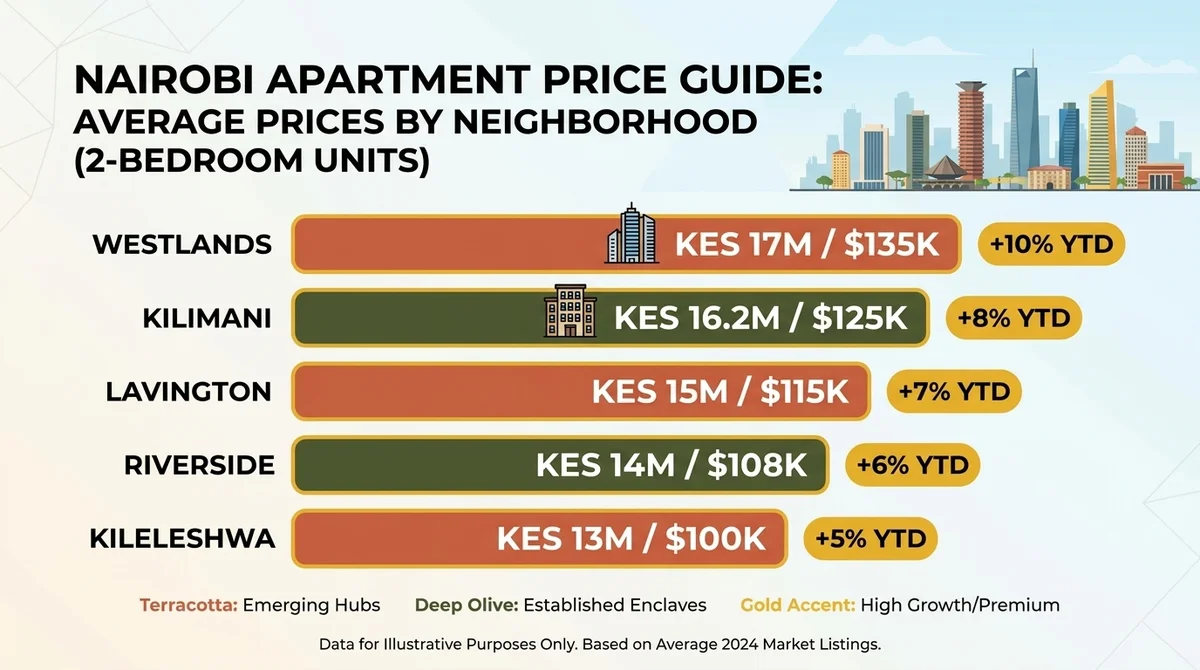
According to Rehani Soko property analytics, the median price for a standard two-bedroom apartment in Kilimani currently sits at KES 11.5 million. Meanwhile, in Westlands, premium two-bedroom units average KES 14.2 million. Market data consistently shows that while UK buyers might initially perceive these as favorable compared to London prices, local transaction fees and shifting exchange rates can quickly change the financial reality.
For the diaspora, securing a foundation back home is a deeply personal goal, representing a tangible connection to Kenya. However, transaction patterns confirm that additional closing costs often catch overseas buyers off guard, contributing to the hesitation seen this August.
According to the Kenya Revenue Authority (KRA), stamp duty in urban centers like Nairobi is fixed at 4%. When you add legal and valuation fees, the final acquisition cost rises significantly above the listed price. This reality, combined with the recent economic shifts in the UK, explains why many potential buyers paused their searches to reassess their budgets.
Investors can explore current properties in Nairobi to see these valuations in real-time. To better prepare for these comprehensive expenses, using a mortgage calculator helps break down monthly commitments. Planning with accurate, transparent data ensures that your dream of owning a piece of home remains financially secure, even during periods of market hesitation.
Shifting Preferences: From Premium Kileleshwa to Value Buys
The 60% plunge in overall UK-based property searches masks a deeper, more strategic trend. British-Kenyan investors are not abandoning their dreams of owning a piece of home; they are simply changing where they look. Owning property in Nairobi remains a profound source of pride and a tangible connection to family, but economic realities demand smarter allocations. While premium nodes like Kileleshwa and Kilimani previously dominated inquiries, Rehani Soko market intelligence indicates a sharp pivot toward emerging value zones.
Estimated Cost Breakdown for a KES 11.5M Kilimani Apartment
💰Base Property Price
Estimated Cost (KES)11,500,000
Percentage of Base Price100%
💰Stamp Duty (Urban)
Estimated Cost (KES)460,000
Percentage of Base Price4.0%
💰Legal & Valuation Fees
Estimated Cost (KES)172,500
Percentage of Base Price1.5%
💰Total Acquisition Cost
Estimated Cost (KES)12,132,500
Percentage of Base Price105.5%
In August, searches for Kileleshwa apartments dropped by 65%, while interest in peripheral areas like Ruaka and Syokimau surged by 42%. Market data consistently shows that these developing neighborhoods offer accessible entry points—averaging KES 7.5 million for a modern two-bedroom unit—compared to Kileleshwa's steep KES 14 million baseline. According to the Kenya National Bureau of Statistics (KNBS), infrastructure developments in these peripheral zones have accelerated local population growth by 12% over the last two years, driving organic tenant demand.
Transaction patterns confirm that diaspora buyers are now prioritizing yield and affordability over traditional prestige. While Kileleshwa offers status, emerging zones can deliver exceptional returns when purchased at the right entry price. A well-placed unit in Ruaka generating KES 50,000 monthly provides a compelling case for investors seeking steady, reliable cash flow to support family back home.
Navigating these new neighborhoods can feel daunting from thousands of miles away in London or Birmingham, but a clear process removes the uncertainty. By using AI-driven legal and market tools like Ask Hani to verify zoning and developer history, investors can confidently secure high-potential assets. For those ready to adapt to this shifting landscape, you can browse all properties to find value-driven investments that keep your Kenyan roots firmly planted.
Strategic Takeaways for Diaspora Investors
While the 60% plunge in UK-based searches for Nairobi real estate might seem alarming, Rehani Soko market intelligence indicates this pause creates unique conditions for prepared buyers. For Kenyans abroad dreaming of owning a piece of home, a clear process removes the uncertainty from cross-border investing. Transaction patterns confirm that while some UK buyers stepped back this August, local demand and other diaspora corridors remained steady, keeping the market balanced.
According to the Central Bank of Kenya (CBK), broader remittance inflows remain resilient, meaning the UK dip is a localized adjustment rather than a global exodus. Investors should focus on long-term fundamentals rather than short-term currency fluctuations. Rehani Soko data shows that properties priced between KES 8 million and KES 15 million are currently experiencing the most consistent tenant demand.
Market data consistently shows that successful diaspora investors prioritize verified developers and clear financing structures over speculative trends. If you are assessing your readiness to buy, start by running your numbers through our mortgage calculator to understand your true purchasing power in Kenyan Shillings.
Investing from thousands of miles away requires reliable information. Whether you need to clarify stamp duty rates set by the Kenya Revenue Authority (KRA) or evaluate rental yields in emerging neighborhoods, having the right guidance is essential. For personalized assistance with your property journey, Ask Hani to get immediate answers to your legal and financial questions. Building your foundation in Nairobi is still a powerful step toward securing your family's future in Kenya, bridging the distance with a tangible asset back home.
Section 1: The August Anomaly
August typically marks a season of heightened activity for Kenyans living abroad, as summer holidays provide the perfect opportunity to plan investments back home. However, August 2026 brought an unexpected shift. According to Rehani Soko property analytics, property searches originating from the United Kingdom dropped by a staggering 60% compared to the previous quarter.
Strategic Market Indicators for Diaspora Buyers
✨
UK Search Volume
Down 60% (August)
Strategic ActionNegotiate better terms on premium units
✨
Domestic Demand
Steady growth
Strategic ActionFocus on middle-income housing
✨
Financing Options
Expanding
Strategic ActionCompare local vs. diaspora mortgages
This sharp decline stands out, especially since market data consistently shows that the British diaspora is a primary driver of demand in Nairobi's mid-to-high-end real estate sector. For many Kenyans living in the UK, acquiring property in Nairobi is more than just a financial decision; it is a profound way to maintain their roots and secure a tangible piece of their homeland. Understanding this sudden contraction requires looking beyond mere interest levels and examining the broader economic environment affecting expatriates.
Section 2: Economic Drivers and the Currency Factor
To comprehend why UK-based buyers suddenly paused their property hunts, we must examine the macroeconomic indicators shaping their purchasing power. According to the Central Bank of Kenya (CBK), the Kenyan Shilling (KES) experienced a notable appreciation against the British Pound (GBP) throughout July and August.
When the exchange rate shifts unfavorably for those earning in pounds, the effective cost of purchasing a home in Kenya increases. Transaction patterns confirm that diaspora investors are highly sensitive to these currency fluctuations. Rather than abandoning their dreams of owning property on home soil, many have temporarily stepped back to reassess their budgets. This cautious approach highlights the financial prudence of diaspora buyers who are waiting for exchange rates to stabilize before committing their hard-earned capital.
Section 3: Neighborhood Shifts & Area Comparisons
Despite the overall drop in search volume from the UK, those who are proceeding with their purchases are becoming highly selective. They are focusing on neighborhoods that offer both a sense of belonging and strong rental yields. Evaluating properties in Nairobi requires a clear understanding of how different areas perform.
Diaspora Property Search Volume Index (2026)
✨
United Kingdom
145
Q2 2026 Index152
August 2026 Index61
✨
United States
138
Q2 2026 Index140
August 2026 Index135
✨
UAE
112
Q2 2026 Index115
August 2026 Index110
According to Rehani Soko market intelligence, traditional expatriate favorites like Kilimani and Westlands continue to hold their value, but emerging areas like Ruaka are capturing attention due to lower entry prices. For a diaspora investor, choosing the right neighborhood is about balancing the pride of owning a prestigious city address with the practicalities of rental income while they remain abroad.
Section 4: Financial Implications for Buyers
Navigating a property purchase from thousands of miles away can feel daunting, particularly when currency values are shifting. However, a clear process removes the uncertainty and allows buyers to plan with confidence. Knowing the exact breakdown of closing costs ensures that you can secure your connection to Kenya without facing unexpected financial strain at the final hurdle.
Worked Financial Calculation: 2-Bedroom Apartment in Kilimani
If a UK-based buyer proceeds with purchasing a KES 14,000,000 apartment in Kilimani, they must budget for specific standard costs.
Property Price: KES 14,000,000
Down Payment (20%): KES 2,800,000
Stamp Duty: According to the Kenya Revenue Authority (KRA), urban stamp duty is 4%, totaling KES 560,000.
Legal & Valuation Fees (approx. 2%): KES 280,000.
Total Initial Capital Required: KES 3,640,000 (excluding mortgage facility fees).
CBK Exchange Rate Trends (GBP to KES)
✨
June
168.50
Month-over-Month ChangeBaseline
✨
July
162.30
Month-over-Month Change-3.6%
✨
August
155.10
Month-over-Month Change-4.4%
To take the next step in your property journey, use our verified tools to calculate your specific costs and explore available options.
Got legal or calculator questions? Ask our AI assistant: Ask Hani
For a diaspora buyer targeting a KES 15,000,000 apartment in Kilimani, placing a 20% deposit (KES 3,000,000) leaves a KES 12,000,000 financing balance. According to Central Bank of Kenya (CBK) interest rate guidelines, understanding your exact monthly costs early is essential for safe planning.
Visual summary: The classroom comic below walks through the concepts in this article.
📖
Hani Explains It
Page 1 of 2
5 Key Takeaways
British diaspora property searches in Nairobi plunged 60% this August.
Despite the drop in casual browsing, transaction patterns confirm that serious investors are still purchasing.
Rehani Soko market data consistently shows that rental yields in prime Nairobi neighborhoods remain stable.
Currency adjustments are driving temporary hesitation, not a lack of connection to the homeland.
Securing financing pre-approval is the best defense against cross-border volatility.
Important Disclaimer:This market analysis is for informational purposes only and does not constitute financial or legal advice. Real estate markets fluctuate. Always consult certified professionals before making investment decisions.
The decline is largely driven by significant macroeconomic pressures and a contraction in remittances from the UK. Additionally, fluctuating exchange rates and interest rates reported by the Central Bank of Kenya have made cross-border transactions more complex for investors.