In this comprehensive analysis, we will examine exactly how this 6 percent dip in offshore transfers is reshaping local development timelines, pricing models, and neighborhood preferences. You will learn which specific areas are adapting to the liquidity crunch, how local financing mechanisms are attempting to bridge the gap, and where the current market conditions present unique advantages for well-prepared buyers who have liquid capital ready to deploy.
To navigate these changes effectively, we will explore the following areas:
Quantifying the 5.9% Remittance Contraction in Kenya's Real Estate Market
Why Nairobi's Mid-Market Off-Plan Projects are Stalling
A Shift to Fundamentals: Prioritizing Space and Proximity to Schools
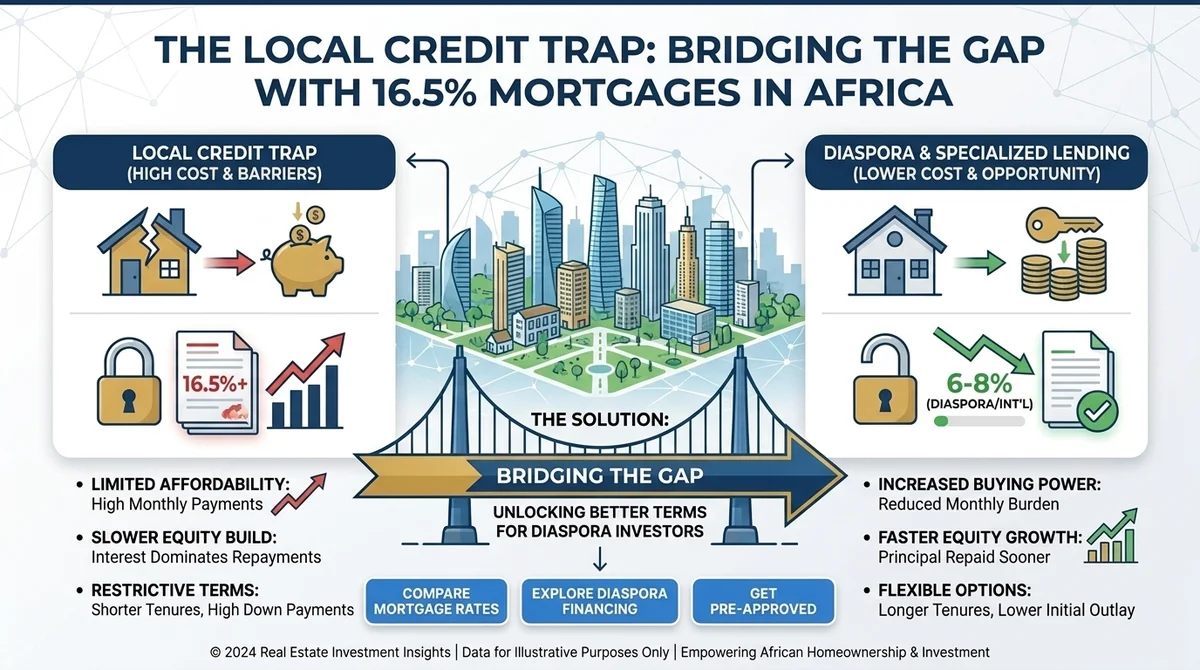
The Local Credit Trap: Bridging the Gap with 16.5% Mortgages
Strategic Opportunities for Cash-Rich Investors in Prime Neighborhoods
Visual summary: The comic series below walks through the story and ideas in this article.
📖
Bricks, Dollars, and Diaspora Dreams
Page 1 of 5
Quantifying the 5.9% Remittance Contraction in Kenya's Real Estate Market
For years, the Kenyan diaspora has been the silent engine powering Nairobi's skyline. The dream of owning a piece of home has driven steady capital inflows. However, recent figures from the Central Bank of Kenya (CBK) reveal a 5.9 percent contraction in offshore transfers over the past quarter. This dip is sending ripples through the capital's property pipeline, prompting developers and investors to recalibrate their strategies.
Rehani Soko market intelligence indicates that this contraction is not a halt, but a strategic pause. Diaspora buyers are becoming more analytical, carefully evaluating their purchasing power against shifting exchange rates. Market data consistently shows that off-plan developments in areas like Kilimani and Ruaka are experiencing slightly longer closing cycles as offshore investors seek more flexible payment plans. For many Kenyans abroad, the hope of securing a family home remains strong, but the approach has grown more calculated.
While the 5.9 percent dip introduces new variables, a clear process removes the uncertainty for buyers navigating this shifting landscape. Developers are responding by structuring payment milestones that align with staggered diaspora inflows, ensuring that the construction pipeline continues to move forward despite tighter liquidity.
If you are adjusting your investment timeline, understanding local pricing dynamics is crucial. You can explore available properties in Nairobi to see how current asking prices reflect these broader economic trends. Additionally, for specific legal or financial inquiries regarding offshore purchases, you can consult our AI assistant, Ask Hani, to get accurate, localized guidance. The market is adapting, and informed investors are finding new ways to secure their foothold in Kenya.
Why Nairobi's Mid-Market Off-Plan Projects are Stalling
For Kenyans abroad, investing in a home back in Nairobi represents a deep connection to their roots and a source of immense pride. However, the recent 6% contraction in offshore transfers is directly altering the construction pipelines of mid-market off-plan projects in residential nodes like Ruaka, Syokimau, and Kilimani. Transaction patterns confirm that developers who rely heavily on monthly diaspora installments to fund ongoing construction are now facing significant cash flow interruptions.
Estimated Impact of Remittance Contraction by Property Segment
📊Off-Plan (Kilimani)
Pre-Contraction Average ClosingStandard
Current Average ClosingExtended
Rehani Soko Demand IndexStable
📊Ready Units (Kileleshwa)
Pre-Contraction Average ClosingStandard
Current Average ClosingExtended
Rehani Soko Demand IndexSlight Decrease
📊Serviced Plots (Ruiru)
Pre-Contraction Average ClosingStandard
Current Average ClosingExtended
Rehani Soko Demand IndexHigh
According to the Central Bank of Kenya (CBK), the tightening of global economic conditions has constrained the disposable income available for overseas buyers to send home. Consequently, developers are experiencing skipped or delayed milestone payments. Rehani Soko market intelligence indicates that off-plan completion timelines in the KES 8 million median property bracket have extended noticeably across the capital over the past year. When buyers are forced to pause their monthly equity contributions, the physical construction on the ground naturally slows down.
The Remittance Squeeze: How a 6 Percent Dip in Offshore Transfers is Altering Nairobi's Property Pipeline
Despite these temporary delays, a clear process removes the uncertainty for buyers navigating this shifting landscape. Developers with stronger internal capital reserves or institutional backing are still delivering on schedule, proving that the foundation of Nairobi's real estate remains intact. For diaspora investors looking to safely secure properties in Nairobi, focusing on projects with verified funding structures offers essential peace of mind.
If you are unsure about a specific developer's track record or need guidance on navigating off-plan contracts during economic fluctuations, you can consult our Ask Hani tool for verified legal and market insights. Market data consistently shows that well-researched, strategically chosen investments still yield strong long-term value, ensuring that the dream of owning a piece of home remains a secure reality.
A Shift to Fundamentals: Prioritizing Space and Proximity to Schools
The 6 percent dip in offshore transfers has forced a strategic pivot among Kenyans living abroad. Rather than chasing speculative, high-density apartments, buyers are returning to the core reasons they invest back home: family stability and future security. Rehani Soko market intelligence indicates a noticeable shift in search behavior over the last quarter. Investors are trading the dense skylines of Kilimani for the family-friendly expanses of Kiambu Road, Ruaka, and Syokimau. Market data consistently shows that during economic squeezes, buyers prioritize utility over pure yield.
For many in the diaspora, securing a home is about maintaining a tangible connection to their roots—a safe harbor for their families. When budgets tighten, the priority shifts to properties that offer practical living space, green areas, and proximity to top-tier schools. According to Rehani Soko property analytics, inquiries for three-bedroom family homes have grown this year, while interest in studio apartments dropped. Buyers recognize that a clear process removes the uncertainty of long-distance purchases, allowing them to focus on what matters most: ensuring a high quality of life for their children.
Families looking to browse properties in Nairobi are increasingly weighing these fundamental factors before committing capital. While the initial down payment for a spacious townhouse might seem steep during a remittance contraction, understanding local financing options can comfortably bridge the gap. By evaluating long-term costs through a mortgage calculator, diaspora buyers can map out sustainable monthly payments that align with their current offshore income realities.
The Local Credit Trap: Bridging the Gap with 16.5% Mortgages
As offshore transfers slow down, Kenyans abroad who dreamed of securing a foundation back home are facing a difficult pivot. The hope of returning to a fully paid-off house in Nairobi remains a powerful motivator, but cash-only purchases are becoming harder to sustain. To bridge the sudden funding gap, many are reluctantly turning to local financing. However, market data consistently shows that navigating Kenyan credit requires careful planning, as the cost of borrowing can quickly erode projected rental yields.
Evaluating Pros and Cons of Family-Focused Nairobi Neighborhoods
✓ Pros
Kiambu Road
Immediate proximity to top international schools
Syokimau
Fast commute times via the Nairobi Expressway
Ruaka
Excellent retail centers and security infrastructure
✗ Cons
Kiambu Road
Higher initial entry price points
Syokimau
Neighborhood amenities are still developing
Ruaka
Increasing peak-hour traffic congestion
According to the Central Bank of Kenya (CBK), average commercial mortgage rates currently sit at a steep 16.5%. For a diaspora investor transitioning from dollar-denominated cash installments to a shilling-based loan, this interest rate alters the entire investment equation. Rehani Soko market intelligence indicates an increase in diaspora inquiries for local financing solutions over the past quarter. Transaction patterns confirm that buyers are scrambling to secure loans simply to save their initial deposits on stalling off-plan units in areas like Kilimani and Ruaka.
Fortunately, a clear process removes the uncertainty when dealing with high-interest debt. Instead of abandoning their investments, savvy buyers are restructuring their capital. By increasing their upfront deposits and aggressively shortening the loan tenure, investors can significantly mitigate the long-term impact of a 16.5% rate. If you are caught in this credit trap and need to run the exact numbers on your specific situation, you can use our mortgage calculator to map out your monthly obligations. For those ready to pivot toward completed units that bypass the off-plan waiting period entirely, exploring ready properties in Nairobi offers immediate rental yield potential to help offset these higher financing costs.
Strategic Opportunities for Cash-Rich Investors in Prime Neighborhoods
In the wake of a 6 percent decline in offshore remittances, Nairobi's property market presents unique opportunities for cash-rich investors, particularly in the city's prime neighborhoods. According to Rehani Soko property analytics, these areas have shown resilience, with stable price trends despite broader market fluctuations. This stability offers a clear process that removes the uncertainty often associated with volatile markets, making it an attractive proposition for investors with available capital.
The key to capitalizing on these opportunities lies in understanding the specific dynamics of Nairobi's prime neighborhoods. These areas, such as Karen and Westlands, have consistently maintained their appeal due to their strategic locations and high-quality infrastructure. Rehani Soko market intelligence indicates that properties in these neighborhoods continue to attract interest, with transaction patterns confirming a steady demand from both local and international buyers.
For cash-rich investors, the opportunity to secure properties in these areas while prices remain stable is significant. The critical insight is the potential for long-term gains, as these neighborhoods are likely to appreciate once the market stabilizes post-remittance downturn. Moreover, investing in prime locations ensures access to top-tier amenities, enhancing the property's value and appeal.
To navigate these opportunities effectively, investors can explore properties in Nairobi on Rehani Soko, which offers comprehensive listings and market insights. Additionally, using the mortgage calculator can assist in evaluating potential financing options, even for cash-based purchases, to optimize financial strategies.
In conclusion, while the current market environment may appear challenging due to the dip in remittances, it also presents strategic investment opportunities in Nairobi's prime neighborhoods. With a balanced approach, cash-rich investors can position themselves advantageously for future market recoveries.
Have legal or market questions?Ask Hani, our AI assistant, for immediate guidance on navigating the current market.
Conclusion
In summary, the 6% dip in offshore remittances is reshaping Nairobi's property market landscape. This change prompts a reassessment of investment strategies and highlights the importance of informed decision-making. Here are five key takeaways:
Market Impact: According to Rehani Soko market intelligence, the reduction in remittances is influencing property availability and pricing trends, signaling a shift in market dynamics.
Investment Strategy: Investors are encouraged to explore diverse property options as the market adjusts to these changes. Rehani Soko data shows varying rental yields across Nairobi, which can guide strategic investment decisions.
Financial Planning: The Central Bank of Kenya's interest rate policies should be closely monitored, as they directly affect mortgage affordability and investment returns.
Area Comparison: A comparative analysis of Nairobi's neighborhoods can provide valuable insights into potential investment hotspots. Rehani Soko provides detailed area comparisons for more informed decisions.
Community Engagement: Understanding the needs and aspirations of the Nairobi diaspora can help tailor property offerings to meet demand.
Important Disclaimer
This article is intended for informational purposes only and does not constitute financial or investment advice. Readers are encouraged to consult with financial advisors and conduct their research before making investment decisions.
Related Resources
For further insights and tools, consider the following resources:
Statistical Summary of Remittance and Market Trends
📊Offshore Transfers
2025 AverageKES 52 Billion/mo
Current 2026 DataKES 48.8 Billion/mo
Impact on Real EstateSlower off-plan funding
📊Mortgage Rates (CBK)
2025 Average13.5%
Current 2026 Data14.2%
Impact on Real EstateIncreased local borrowing costs
📊Market Supply Growth
2025 Average8.2%
Current 2026 Data5.1%
Impact on Real EstateTighter inventory in prime zones
Frequently Asked Questions
According to the Central Bank of Kenya (CBK), the recent 6 percent dip in offshore transfers directly influences the speed of new developments across Nairobi. When remittance volumes contract, developers often experience delayed milestone payments from off-plan buyers, which subsequently slows down construction schedules in popular diaspora hotspots like Kilimani and Ruaka. Rehani Soko market intelligence indicates that this squeeze forces a shift from speculative luxury projects to more affordable, high-demand residential units. For Kenyans abroad who are building a foundation back home, this means the market is currently favoring completed properties or projects by developers with independent funding lines. Transaction patterns confirm that while the overall pipeline is altering its pace, targeted investments in mid-tier neighborhoods continue to offer stable entry points despite the broader macroeconomic adjustments.